Philosophy of science: the most famous cards
The free Wikipedia card game and general-knowledge games
461 cards
Mythics 39
 1596 – 1650 French philosopher, mathematician, and scientist
 Science systematic study of the world through testable explanations, empirical evidence, and independent verification
 one of the basic units of biological classification and a taxonomic rank
 1561 – 1626 English philosopher and statesman
 1872 – 1970 British philosopher and logician
 1548 – 1600 Italian Dominican friar, philosopher and mathematician
 342 BC – 270 BC ancient Greek philosopher
 1902 – 1994 Austrian–British philosopher, academic and social commentator
 1879 – 1955 German-born theoretical physicist
 1643 – 1727 English mathematician and physicist
 1564 – 1642 Italian polymath
 Artificial intelligence field that develops and studies software enabling machines to exhibit intelligent behavior
 1912 – 1954 English computer scientist
 the whole cosmic system
 dimension in which events can be ordered from the past through the present into the future
 1473 – 1543 Polish mathematician and astronomer
 fundamental theory in physics describing the properties of nature on an atomic scale
 born 1928 American linguist and activist
 980 – 1037 Persian polymath, physician and philosopher
 branch of philosophy studying the nature and scope of knowledge
 1707 – 1778 Swedish botanist, physician, and zoologist; developed the foundations of modern taxonomy
 1572 – 1630 German mathematician and astronomer
 1885 – 1962 Danish physicist
 techniques used in the construction and testing of scientific hypotheses; in particular mathematical and experimental techniques employed in the natural sciences
… and 15 more Mythic cards to discover in the game.
The 461 cards of Did you know Cards linked to “Philosophy of science”, those closest to the topic first, then by fame (how often their Wikipedia article is read, and in how many languages): René Descartes, Science, Species, Francis Bacon… The more famous the subject, the rarer its card.
Legendaries 163
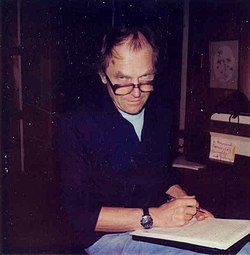 Austrian-born philosopher of science
 Hungarian philosopher of mathematics and science
 American philosopher, scholar in the field of science and technology studies
 French philosopher and historian of science
 French philosopher, astronomer, mathematician, priest, and scientist (*1592 – †1655)
 English philosopher and historian of science
 Positivism philosophy of science based on the view that information derived from scientific observation is the exclusive source of all authoritative knowledge
 Philosophy of science branch of philosophy concerned with the foundations, methods, and implications of science
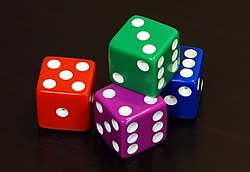 Probability measure of the expectation that an event will occur or a statement is true
- Empiricism theory that states that knowledge comes only or primarily from sensory experience
 contemplative and rational type of abstract or generalizing thinking, or the results of such thinking
 fundamental principle in quantum physics
 scientific procedure carried out to support, refute, or validate a hypothesis
 method of reasoning in which a body of observations is synthesized to hypothesize a general principle
 Particle physics branch of physics dealing with the interactions of subatomic particles
 Holism philosophical position that systems should be analyzed as wholes, not just as collections of parts
 active acquisition of information from a primary source
 English philosopher and political theorist
 Anglo-Irish natural philosopher, chemist, physicist, and inventor
 Canadian educator, philosopher, and scholar
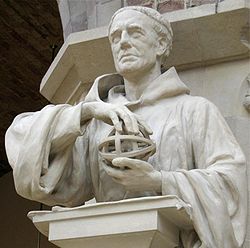 English polymath, philosopher and friar (c.1219/20–c.1292)
 German philosopher
 American philosopher
 Indian philosopher, activist and environmentalist (*1952)
… and 139 more Legendary cards to discover in the game.
Epics 153
- Étienne Klein — French Philosopher of Science, epistemologist
- Isabelle Stengers — Belgian philosopher of science and scientist
- Michael Ruse — British-Canadian science philosopher
- David Hawkins — American philosopher of science
- Giulio Giorello — Italian philosopher of science
- Tim Maudlin — American philosopher of science
- Philosophy of biology — subfield of philosophy of science
- Alexander Rosenberg — American philosopher
- Don Ihde — American philosopher
- Leo Apostel — Belgian philosopher/professor:Vrije Universiteit Brussel/Ghent University
- Connectionism — approach in cognitive science that hopes to explain mental phenomena using artificial neural networks
- Operational definition — defining a concept in terms of specific, replicable actions or procedures
- Phenomenalism — philosophical concept
- Philosophy of psychology — theoretical foundations of modern psychology
- Measurement in quantum mechanics — interaction of a quantum system with a classical observer
- Molyneux's problem — philosophical thought experiment: “if a man born blind, who can feel the differences between shapes, is given the ability to see, could he distinguish those objects by sight?”
- Not even wrong — phrase used to describe bad science, generally attributed to Wolfgang Pauli
- Bohr–Einstein debates — series of public disputes between physicists Niels Bohr and Albert Einstein
- Conventionalism — philosophical belief that principles depend on societal agreements, not external reality
- Principles of Philosophy — book by Descartes
- Hajime Tanabe — Japanese philosopher
- Bernardino Telesio — Italian philosopher
- Wilhelm Windelband — German philosopher
- Gustavo Bueno — Spanish philosopher
… and 129 more Epic cards to discover in the game.
Related topics
- Epistemology 332 cards
- Metaphysics 524 cards
- Logic 664 cards
- Modern philosophy 990 cards
- Philosophy of mind 245 cards
- Analytic philosophy 171 cards
- Philosophy of language 222 cards
- History of physics 163 cards


In the Science booster
 Science 282,135 cards ›
About
Mythic 39 · Legendary 163 · Epic 153 · Rare 83 · Common 23
Fame score: Wikipedia page views (July 2015 – October 2026, 39 languages). Updated .
All these cards are won by opening boosters in Did you know Cards, the free card game where you learn as you play. All topics ›
All 461 “Philosophy of science” cards in the game