Philosophy of mind: the most famous cards
The free Wikipedia card game and general-knowledge games
245 cards
Mythics 16
 biological states associated with the nervous system
 1596 – 1650 French philosopher, mathematician, and scientist
 1632 – 1704 English philosopher and physician
 1632 – 1677 Dutch philosopher
 1889 – 1951 Austrian philosopher and logician
 1902 – 1994 Austrian–British philosopher, academic and social commentator
 1842 – 1910 American philosopher, psychologist, and pragmatist
 1859 – 1941 French philosopher
 Artificial intelligence field that develops and studies software enabling machines to exhibit intelligent behavior
 1912 – 1954 English computer scientist
 born 1928 American linguist and activist
 1875 – 1961 Swiss psychiatrist and psychotherapist
 1646 – 1716 German mathematician and philosopher
 knowledge that a being has of its external and internal existence and its environment
- combination of cognitive faculties that provides consciousness, thinking, reasoning, perception, and judgement in humans and potentially other life forms
 language model built with very large amounts of texts
The 245 cards of Did you know Cards linked to “Philosophy of mind”, those closest to the topic first, then by fame (how often their Wikipedia article is read, and in how many languages): Emotion, René Descartes, John Locke, Baruch Spinoza… The more famous the subject, the rarer its card.
Legendaries 87
 Solipsism philosophical idea that only one's own mind is sure to exist
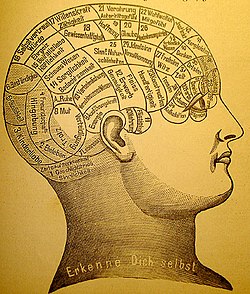 Philosophy of mind branch of philosophy that studies the nature of the mind
 Tabula rasa Latin phrase; philosophical theory of mind
 open question in philosophy of how abstract minds interact with physical bodies
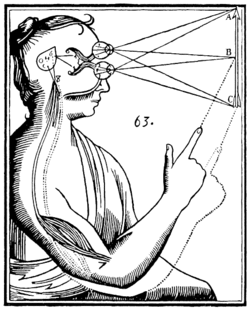 philosophical theory that mental phenomena are non-physical and that matter exists independently of mind
 Intentionality in philosophy, the power of minds to be about something, to represent or to stand for things, properties and states of affairs
 philosophical view that mind is a fundamental and ubiquitous feature of reality
 philosophy that only minds and ideas are real
- Cognition mental action or process of acquiring knowledge and understanding through thought, experience, and the senses
 early 20th century philosophical movement that seeks to describe the universal features of consciousness without assumptions about the external world, aiming to describe phenomena as they appear and exploring the significance of lived experience
 test of a machine's ability to exhibit intelligent behaviour equivalent to, or indistinguishable from, that of a human
 conscious subjective experience of emotion
 view that attributes oneness or singleness to a concept
 psychological term refering to the group of acts and functions of the mind
 Self-awareness capacity for an individual to consciously know and understand one's own character, feelings, motives, and desires
 Qualia individual instances of subjective, conscious experience
 Self-reflection capacity of humans to exercise introspection and to attempt to learn more about their fundamental nature, essence and limitations
 capacity to feel, perceive, or experience subjectively
 systems concept which entails automatic reproduction and maintenance
 Hard problem of consciousness the problem of explaining how and why organisms have qualia or phenomenal experiences
 developed ability of the mind to asure to emerge with the correct conclusions about what is true or real, and about how to solve problems
 thought experiment in philosophy
- German philosopher, known as the father of phenomenology
 Chinese Taoist philosopher
… and 63 more Legendary cards to discover in the game.
Epics 84
- Neutral monism — philosophical theory that mind and matter are each reducible to some third category which is neither mental nor material, but somehow neutral between them
- Externalism — a group of positions in the philosophy of mind which argues that the mind is not only the result of what is going on in the body, but also what occurs or exists outside the subject
- Cartesian theater — philosophical term denoting the supposed terminus between mind and body
- Andy Clark — British philosopher
- Connectionism — approach in cognitive science that hopes to explain mental phenomena using artificial neural networks
- Phenomenalism — philosophical concept
- Philosophy of self — defines, among other things, the conditions of identity that make one subject of experience distinct from all others
- Philosophy of psychology — theoretical foundations of modern psychology
- Eliminative materialism — the claim that people's common-sense understanding of the mind (or folk psychology) is false and that certain classes of mental states that most people believe in do not exist
- Occasionalism — philosophical theory stating that nothing can occur except under the causation of God
- Dream argument — argument that the act of dreaming provides preliminary evidence that the senses should not be fully truste
- Supervenience — relation between sets of properties or sets of facts, in which some difference is necessary in the latter for a difference in the former to be possible
- Morphological analysis — heuristic method
- Integrated information theory — theory within consciousness research
- Plato's tripartite theory of soul — Plato's account of the soul as consisting of logical, spirited, and appetitive parts
- AI effect — phenomenon that onlookers discount the behavior of an artificial intelligence program by arguing that it is not real intelligence
- Ghost in the machine — philosophical concept
- Philosophy of perception — PRE-CONCEIVED ANALYSIS AND INTERPRETATION FOR DECODIFICATION
- Category mistake — semantic or ontological error
- The Principles of Psychology — 1890 book by Wm. James
- Neural correlates of consciousness — bodily components, such as electrical signals, correlating to consciousness and thinking
- Twin Earth thought experiment — thought experiment by philosopher Hilary Putnam
- Homunculus argument — informal fallacy
- Involuntary memory — memory recall that occurs when cues encountered in everyday life evoke recollections of the past without conscious effort
… and 60 more Epic cards to discover in the game.
Related topics
- Metaphysics 524 cards
- Philosophy of language 222 cards
- Philosophy of science 461 cards
- Epistemology 332 cards
- Analytic philosophy 171 cards
- Artificial intelligence 409 cards
- Logic 664 cards




In the Science booster
 Science 282,135 cards ›
About
Mythic 16 · Legendary 87 · Epic 84 · Rare 49 · Common 9
Fame score: Wikipedia page views (July 2015 – October 2026, 39 languages). Updated .
All these cards are won by opening boosters in Did you know Cards, the free card game where you learn as you play. All topics ›
All 245 “Philosophy of mind” cards in the game