Analytic philosophy: the most famous cards
The free Wikipedia card game and general-knowledge games
171 cards
Mythics 3 Legendaries 54
 1919 – 2001 British analytic philosopher
 20th-century tradition of Western philosophy
 process of applying analytical methods to existing data of a specific type, breaking a complex topic or substance into smaller parts in order to gain a better understanding of it
 logical connective OR
 1872 – 1970 British philosopher and logician
 1889 – 1951 Austrian philosopher and logician
 knowledge that a being has of its external and internal existence and its environment
 1921 – 2002 American philosopher, philosophy teacher
 1839 – 1914 American philosopher, logician, mathematician, and scientist
 1848 – 1925 German philosopher, logician, and mathematician
 1942 – 2024 American philosopher
 1908 – 2000 American philosopher and logician
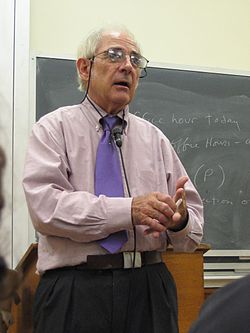 1932 – 2025 American philosopher
 1931 – 2007 American philosopher
 1891 – 1970 German philosopher and logician
 1873 – 1958 English philosopher
 born 1931 Canadian philosopher
 born 1937 American philosopher
 1910 – 1989 English philosopher
 born 1949 American Christian apologist and theologian
 1882 – 1936 German philosopher
 1919 – 2020 Argentine-Canadian philosopher
 1907 – 1992 English legal philosopher
 born 1932 American Christian philosopher
 1942 – 2017 British philosopher
 1935 – 2017 American philosopher
 born 1964 Italian philosopher
… and 30 more Legendary cards to discover in the game.
The 171 cards of Did you know Cards linked to “Analytic philosophy”, those closest to the topic first, then by fame (how often their Wikipedia article is read, and in how many languages): G. E. M. Anscombe, Analytic philosophy, Analysis, Logical disjunction… The more famous the subject, the rarer its card.
Epics 72
- William L. Rowe — American philosopher
- Ordinary language philosophy — view that philosophical problems are based in distortions of language
- Logical atomism — philosophical view expounded by Bertrand Russell
- Family resemblance — group of things connected by a series of overlapping similarities, where no one feature is common to all of the things
- Experience machine — thought experiment about a machine that provides any pleasurable experience one wants
- Ostensive definition — conveying the meaning of a term by pointing out examples
- Overdetermination — psychoanalytical concept or philosophical category, which designates the causation of a single effect by multiple conditions
- Quietism (philosophy) — view on the purpose of philosophy
- Analytic reasoning — ability to look at information and discern patterns
- Principia Ethica — philosophical book
- Open-question argument — philosophical argument put forward by British philosopher G. E. Moore, to refute the equating of the property of goodness with some non-moral property, X, whether naturalistic (e.g. pleasure) or supernatural
- Arthur Coleman Danto — American art critic and philosopher
- A. C. Grayling — English philosopher
- Georg Henrik von Wright — Finland Swedish philosopher, professor and member of the Academy of Finland
- Patricia Churchland — Canadian philosopher
- Stanley Cavell — American philosopher
- Harry Frankfurt — American philosopher
- Jaakko Hintikka — Finnish philosopher and logician
- Jason Stanley — American philosopher
- Wilfrid Sellars — American philosopher
- Joseph Raz — Israeli philosopher
- Anthony Kenny — British philosopher
- Susan Haack — English professor of philosophy and law
- John Hospers — American philosopher and politician
… and 48 more Epic cards to discover in the game.
Related topics
- Philosophy of language 222 cards
- Epistemology 332 cards
- Philosophy of mind 245 cards
- Philosophy of science 461 cards


In the Science booster
 Science 282,135 cards ›
About
Mythic 3 · Legendary 54 · Epic 72 · Rare 37 · Common 5
Fame score: Wikipedia page views (July 2015 – October 2026, 39 languages). Updated .
All these cards are won by opening boosters in Did you know Cards, the free card game where you learn as you play. All topics ›
All 171 “Analytic philosophy” cards in the game