History of physics: the most famous cards
The free Wikipedia card game and general-knowledge games
163 cards
Mythics 9
 1879 – 1955 German-born theoretical physicist
 1856 – 1943 Serbian-American engineer and inventor
 1564 – 1642 Italian polymath
 1473 – 1543 Polish mathematician and astronomer
 classical formulation of Mechanics by Isaac Newton
 1777 – 1855 German mathematician and physicist
 1903 – 1957 Hungarian and American mathematician and physicist
 384 BC – 322 BC Greek philosopher
 World War II American R&D program that produced the first nuclear weapons
The 163 cards of Did you know Cards linked to “History of physics”, those closest to the topic first, then by fame (how often their Wikipedia article is read, and in how many languages): Albert Einstein, Nikola Tesla, Galileo Galilei, Nicolaus Copernicus… The more famous the subject, the rarer its card.
Legendaries 60
 History of physics aspect of history
 astronomical model in which the Earth and planets revolve around a relatively stationary Sun at the center of the Solar System
 branch of physics concerned with formulating theory rather than performing experiments
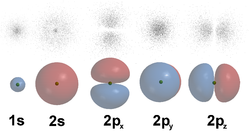 History of atomic theory history of scientific theory that views matter as made up of atoms of chemical elements
 Classical physics theories of physics that predate modern, more complete, or more widely applicable theories
 Luminiferous aether postulated medium for the propagation of light
 fictional or hypothetical technology that removes gravitational force from a place or object
 Balmer series hydrogen spectral series
 physical experiment that demonstrated the quantization of angular momentum
 history of the periodic table of the elements
 formula for spectral line wavelengths in alkali metals
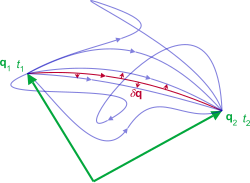 a variational principle that, when applied to the action of a mechanical system, can be used to obtain the equations of motion for that system
- History of quantum mechanics aspect of history
 Old quantum theory set of heuristic corrections to classical physics that served as a predecessor to modern quantum mechanics
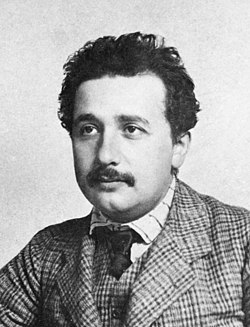 papers of Albert Einstein published in the Annalen der Physik scientific journal in 1905
 law of physics and chemistry
 model of the atom devised by Ernest Rutherford
 scientific model of the atom first proposed by J. J. Thomson in 1904
 phase of rapid industrialization in the final third of the 19th century and the beginning of the 20th
 fluid engineering and fluid mechanics
 Natural philosophy ancient philosophical study of nature and physical universe that was dominant before the development of modern science. It is considered to be the precursor of natural science
 Atomism natural philosophy
 series of experiments (1908–1913) by Hans Geiger and Ernest Marsden, directed by Ernest Rutherford, at the University of Manchester, proving the existence of the atomic nucleus through alpha particle scattering on gold foil
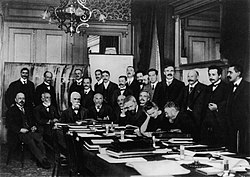 series of academic conferences
… and 36 more Legendary cards to discover in the game.
Epics 53
- History of gravitational theory — theories in physics that postulate mechanisms of interaction governing the movements of bodies with mass
- Caloric theory — obsolete scientific theory of heat flow
- Bohr–Einstein debates — series of public disputes between physicists Niels Bohr and Albert Einstein
- History of the battery — history of electricity source
- History of special relativity — aspect of history
- Line of force — historical concept in electromagnetism
- Arago spot — bright point that appears at the center of a circular object's shadow due to Fresnel diffraction
- History of thermodynamics — aspect of history
- History of optics — study of the development of optics with lenses and theories of light and vision over time
- History of the metric system — history of the metric system measurement standards
- Gun-type fission weapon — fission-based nuclear weapon
- History of general relativity — history of the general theory of relativity with contributions from Albert Einstein, Marcel Grossmann, David Hilbert and others
- Pound–Rebka experiment — experiment designed to test Albert Einstein's theory of general relativity
- Welteislehre — pseudoscientific cosmological theory proposed by Hanns Hörbiger that ice was the basic cosmic substance and that ice moons, ice planets, and the “global ether” (made of ice) determine the development of the universe
- Battelle Memorial Institute — American applied science and technology development research institute
- Le Sage's theory of gravitation — obsolete kinetic theory of gravity that explained Newton’s gravitational force in terms of streams of unseen particles impacting material objects from all directions
- Rubens' tube — Physics apparatus for demonstrating acoustic standing waves in a tube
- Franck Report — petition against the use of nuclear weapons published in June 1945
- History of materials science — aspect of history
- History of fluid mechanics — aspect of history
- Clockwork universe — a concept that compares the universe to a mechanical clock
- Johann Georg von Soldner — German physicist
- Einstein–Oppenheimer relationship — relationship between Einstein and Oppenheimer
- Moseley's law — empirical law concerning the characteristic x-rays that are emitted by atoms
… and 29 more Epic cards to discover in the game.
In the Science booster
 Science 282,135 cards ›
About
Mythic 9 · Legendary 60 · Epic 53 · Rare 34 · Common 7
Fame score: Wikipedia page views (July 2015 – October 2026, 39 languages). Updated .
All these cards are won by opening boosters in Did you know Cards, the free card game where you learn as you play. All topics ›
All 163 “History of physics” cards in the game