Science: the most famous cards

The free Wikipedia card game and general-knowledge games
6,388 cards Classic 120 ◎ Silver 220 ◎ Gold 480 ◎ Prestige 1,200 ◎ Odds ›
Mythics 376
 table systematically placing elements based on atomic number and recurrent properties
 smallest unit of a chemical element
 Black hole astronomical object so massive, that anything falling into it, including light, cannot escape its gravity
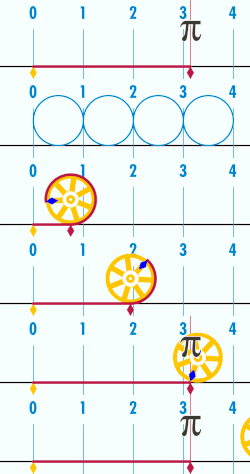 Pi constant ratio of the circumference of a circle to its diameter
 astronomical object consisting of a luminous spheroid of plasma held together by its own gravity
 Planet celestial body directly orbiting a star or stellar remnant
 DNA molecule that encodes the genetic instructions used in the development and functioning of all known living organisms and many viruses
 positive integer with exactly two divisors, 1 and itself
 edible fruit of the apple tree
 Chemical element species of atoms having the same number of protons in the atomic nucleus and the same chemical properties, but not necessarily the same mass, or the same stability (or half-lifetime if they are unstable)
 inflammation of the alveoli of the lungs
 Brain organ that serves as the center of the nervous system in all vertebrate and most invertebrate animals
 physical phenomena associated with the presence and flow of electric charge
 Light electromagnetic radiation at or near visible wavelengths
 Pythagorean theorem relation in Euclidean geometry among the three sides of a right triangle
 Galaxy large gravitationally bound system of stars and interstellar matter
 infectious disease caused by an influenza virus
 integer number zero; neutral element for the addition
 speed of electromagnetic waves in vacuum
 Triangle basic three-sided shape of geometry
 Force physical influence that tends to cause an object to change motion unless opposed by other forces
 liquid water in the form of droplets that have condensed from atmospheric water vapor and then precipitated
 Cholera bacterial infection of the small intestine
 Disease abnormal biological process in an organism driven by a specific pathophysiological mechanism
… and 352 more Mythic cards to discover in the game.
The 6,388 cards of Did you know Cards linked to “Science”, those closest to the topic first, then by fame (how often their Wikipedia article is read, and in how many languages): Periodic table, Atom, Black hole, Pi… The more famous the subject, the rarer its card.
Science booster: price and odds
Boosters are bought with Orbs ◎, the game's currency: you earn them by playing (the chest alone gives up to 600 ◎ an hour), and optional Orb packs start at €1.99.
 Classic 120 ◎ |
 Silver 220 ◎ |
Gold 480 ◎ |
 Prestige 1,200 ◎ |
|
|---|---|---|---|---|
| Mythic | 0.3% | 0.6% | 1.5% | 4% |
| Legendary | 2.2% | 4.4% | 10.5% | 26% |
| Epic | 7.5% | 15% | 33% | 70% |
| Rare | 20% | 40% | 55% | — |
| Common | 70% | 40% | — | — |
5 cards per booster · Odds ›
Legendaries 1,029
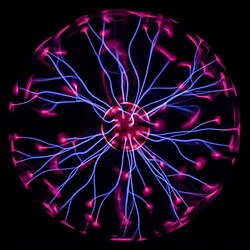 branch of science concerned with the phenomena of electricity and magnetism
 scientific laws describing motion of planets around the Sun
 Scientist person who systematically observes and analyzes phenomena and tests hypotheses using scientific methods
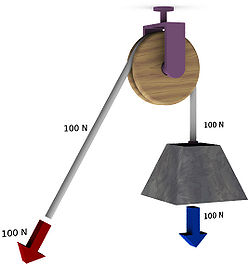 Mechanics science concerned with physical bodies subjected to forces or displacements
 pure chemical substance consisting of two or more different chemical elements
 energy of a moving physical body
 Pascal SI unit of pressure and stress
 Set well-defined mathematical collection of distinct objects
 Polymer substance composed of macromolecules with repeating structural units
 human disease
 medical condition characterized by inflammation of the stomach and/or small intestine
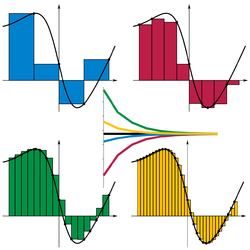 operation in mathematical calculus
 Equation mathematical statement that asserts the equality of two expressions
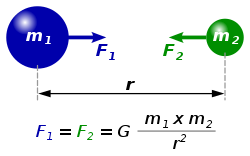 classical mechanics physical law
 chemical substance that can react with an acid, accepting hydrogen ions (protons) or more generally, donating a pair of valence electrons
 type of engineering discipline (not the studies)
 unit of length
 measurement of the human penis
 human disease caused by the bacteria Bordetella pertussis
 Variance expectation of the squared deviation of a random variable from its mean
 Ellipse type of curve on a plane, a type of conic section
 Vacuum space that is empty of matter
 Potential energy energy held by an object because of its position relative to other objects or stresses within itself, rather than its velocity
 Differential equation mathematical equation involving derivatives of an unknown function
… and 1,005 more Legendary cards to discover in the game.
Epics 1,267
- Social research — research conducted by social scientists following a systematic plan
- Edaphology — science concerned with the influence of soils on living things
- Science park — area of research and academic transfer
- Computational science — field concerned with constructing mathematical models and quantitative analysis techniques and using computers to analyze and solve scientific problems
- Greek letter used in mathematics, science, and engineering — symbols for constants, special functions
- Research ethics — ethical practice concerning scientific research
- Scientific instrument — equipment specifically designed to facilitate the acquisition of scientific data
- Not even wrong — phrase used to describe bad science, generally attributed to Wolfgang Pauli
- Laboratory rat — inbred strains of Rattus norvegicus used for scientific research
- Science and technology in Japan — overview of science and technology in Japan
- Science and technology in China — national overview for China
- Scientometrics — study of measuring and analysing science, technology and innovation
- Science and technology in Israel — national research, development and proficience
- Science and technology in the United States — national integration of science and technology
- Technical sciences — metaclass for engineering as a science concerned with the technical development and design of products and systems
- Tumor markers — proxy markers for certain cancers
- Agility — ability to change the direction of the body in an efficient and effective manner, which requires a combination of balance, coordination, speed, reflexes, strength and endurance
- Apparent temperature — estimation of the temperature perceived by living beings, considering humidity, windchill and sun exposure instead of only the air temperature
- Double layer — layer enriched with ions of opposite charge to that carried by a solid surface to maintain electroneutrality in solution
- Health effects of alcohol — health effects of drinking alcohol
- Hydrops fetalis — abnormal accumulation of fluid in two or more fetal compartments
- Exploratory data analysis — approach of analyzing data sets in statistics
- Earthquake prediction — branch of seismology
- Kinematic pair — physical system of two bodies connected to limit their relative movement
… and 1,243 more Epic cards to discover in the game.
Related topics
- Physics 12,653 cards
- Astronomy 12,018 cards
- History of science 2,519 cards
- Mathematics 10,238 cards
- Chemistry 11,212 cards
- Technology 12,129 cards
- Earth science 585 cards
- Physicists 3,916 cards
- Mechanical engineering 1,756 cards
- Philosophy of science 461 cards
- Materials 655 cards
- History of biology 730 cards






Player albums: Science
- Scientifiques — by Ouziel
About
Mythic 376 · Legendary 1,029 · Epic 1,267 · Rare 2,196 · Common 1,520
Fame score: Wikipedia page views (July 2015 – October 2026, 39 languages). Updated .
All these cards are won by opening boosters in Did you know Cards, the free card game where you learn as you play. All topics ›
All 6,388 “Science” cards in the game