Epistemology: the most famous cards
The free Wikipedia card game and general-knowledge games
332 cards
Mythics 20
 branch of philosophy studying the nature and scope of knowledge
 Humanism philosophical school of thought
 c. 428 BC – c. 348 BC 4th-century BC Greek philosopher
 1724 – 1804 German philosopher
 1596 – 1650 French philosopher, mathematician, and scientist
 1632 – 1704 English philosopher and physician
 1872 – 1970 British philosopher and logician
 1813 – 1855 Danish theologian, philosopher, poet and social critic
 1889 – 1951 Austrian philosopher and logician
 1711 – 1776 Scottish philosopher, economist, and historian
 c. 535 BC – c. 470 BC Greek philosopher (late 6th/early 5th-century BC)
 1859 – 1941 French philosopher
 Knowledge awareness of facts, familiarity with individuals and situations, or practical skill; encompasses descriptive, procedural, and acquaintance knowledge, typically characterized as justified true belief distinct from opinion or guesswork
 group of physical, mental and spiritual practices originating from ancient India
 techniques used in the construction and testing of scientific hypotheses; in particular mathematical and experimental techniques employed in the natural sciences
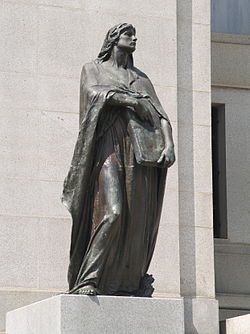 what is in accord with fact or reality
 c. 100 – c. 170 2nd-century Roman mathematician, astronomer, geographer
 1533 – 1592 French author, philosopher, and statesman
 allegory by Plato
 1861 – 1925 Austrian social reformer, occultist and esotericist
The 332 cards of Did you know Cards linked to “Epistemology”, those closest to the topic first, then by fame (how often their Wikipedia article is read, and in how many languages): Epistemology, Humanism, Plato, Immanuel Kant… The more famous the subject, the rarer its card.
Legendaries 144
 Empiricism theory that states that knowledge comes only or primarily from sensory experience
 psychological characteristics of an individual (usually referring to only humans)
 Reason capacity for consciously making sense of things
 method of reasoning in which a body of observations is synthesized to hypothesize a general principle
 Solipsism philosophical idea that only one's own mind is sure to exist
 knowledge or mastery of an event or subject gained through involvement in or exposure to it
 The unconscious group of psychic characters and processes that are reflected in behaviour, even though not shown in the conciousness
 mental attitude wherein an undesired outcome is anticipated
 Fact datum or structured component of reality
 Optimism positive mental attitude
 active acquisition of information from a primary source
 distortion of the senses or perception of reality, which may reveal how the human brain normally organizes and interprets sensory stimulation
 Tabula rasa Latin phrase; philosophical theory of mind
 Introspection process of examining one's own thoughts and feelings, that is closely related to human self-reflection and self-discovery
 belief that only natural laws, entities and forces operate in the universe
 Scientific theory explanation of some aspect of the natural world which can be tested and corroborated
 lack of knowledge or understanding
 famous saying by Socrates
 French philosopher
 Irish idealist philosopher and Anglican bishop
 Pre-Socratic Greek philosopher
 German philosopher
 Chinese Taoist philosopher
 German philosopher
… and 120 more Legendary cards to discover in the game.
Epics 108
- Sandra Harding — American philosopher of feminist theory, postcolonial theory, and epistemology
- Correspondence theory of truth — epistemological theory that the truth value of a statement is determined only by how it relates to the world and whether it accurately describes (corresponds with) that world
- Foundationalism — theory in epistemology which sees some beliefs as being justified in terms of more basic beliefs, some of which are seen as being so basic so as to not require any further justification
- Pramāṇa — epistemology, proof, reliable means of knowledge in Indian philosophies
- Genetic epistemology — study of the origins of knowledge
- Propositional attitude — concept in epistemology referring to the mental state held by an agent toward a proposition
- George Campbell — figure of the Scottish Enlightenment, born 1719
- Subjectivism — philosophical position according primacy to human mental activity, rather than shared or communal ones
- Apperception — several aspects of perception and consciousness
- Phenomenalism — philosophical concept
- Expectation — future event or consequence that is considered or anticipated to be the most likely to happen
- Molyneux's problem — philosophical thought experiment: “if a man born blind, who can feel the differences between shapes, is given the ability to see, could he distinguish those objects by sight?”
- Bohr–Einstein debates — series of public disputes between physicists Niels Bohr and Albert Einstein
- Anti-realism — position that the truth of a statement rests on its demonstrability, not its correspondence to an external reality
- Ignoramus et ignorabimus — "we do not & will not know" — maxim refering to the limits of scientific knowledge
- Sleeping Beauty problem — mathematical problem
- Explicit knowledge — knowledge that has been articulated, codified, and stored in certain media
- Dream argument — argument that the act of dreaming provides preliminary evidence that the senses should not be fully truste
- Techne — categorically operative knowledge related to craft, skill, trade art, cunning, wile, means
- Ad hoc hypothesis — hypothesis added to a theory in order to save it from being falsified
- Procedural knowledge — ability to do something
- Philosophy of perception — PRE-CONCEIVED ANALYSIS AND INTERPRETATION FOR DECODIFICATION
- Map–territory relation — relationship between an object and a representation of that object
- A. C. Grayling — English philosopher
… and 84 more Epic cards to discover in the game.
Related topics
- Metaphysics 524 cards
- Philosophy of science 461 cards
- Logic 664 cards
- Analytic philosophy 171 cards
- Philosophy of mind 245 cards
- Modern philosophy 990 cards
- Aesthetics 489 cards
- Philosophy of language 222 cards




In the Science booster
 Science 282,135 cards ›
About
Mythic 20 · Legendary 144 · Epic 108 · Rare 45 · Common 15
Fame score: Wikipedia page views (July 2015 – October 2026, 39 languages). Updated .
All these cards are won by opening boosters in Did you know Cards, the free card game where you learn as you play. All topics ›
All 332 “Epistemology” cards in the game