Geology: the most famous cards
The free Wikipedia card game and general-knowledge games
11,193 cards
Mythics 81
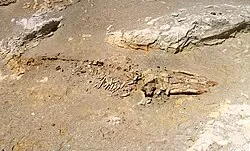 Fossil preserved remains or traces of organisms from a past geological age
 study of the composition, structure, physical properties, and history of Earth's components, and the processes by which they are shaped
 Geologic time scale a system of chronological dating that classifies geological strata (stratigraphy) in time
 Planet celestial body directly orbiting a star or stellar remnant
 larger natural watercourse
 piece of sub-continental land completely surrounded by water
 scientific theory that describes the large-scale motions of Earth's lithosphere
 minor planet of the inner Solar System; not a comet
 Quartz mineral made of silicon and oxygen
 sedimentary rocks made of the chemical substance calcium carbonate
 chemical element with symbol Ir and atomic number 77
 green gemstone, a beryl variety
 measuring the strength ("size") of earthquakes
 third and final period of the Mesozoic Era
 Amethyst mineral of quartz variety
 second period of the Mesozoic Era
 area of sand or small stones near the sea or another area of water such as a lake
 first epoch of the Quaternary Period
 second and current epoch of the Quaternary Period
 first stage and period of the Mesozoic erathem and era
 Cambrian first period of the Paleozoic Era
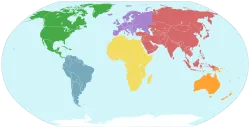 Continent large landmass identified by convention
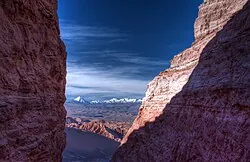 barren area of land where little precipitation occurs
 large natural elevation of the Earth's surface
… and 57 more Mythic cards to discover in the game.
The 11,193 cards of Did you know Cards linked to “Geology”, those closest to the topic first, then by fame (how often their Wikipedia article is read, and in how many languages): Fossil, Geology, Geologic time scale, Planet… The more famous the subject, the rarer its card.
Legendaries 1,110
 Precambrian informal supereon on the geological timescale, spanning from Earth's formation to the Cambrian Period
 first eon of the geological timescale, beginning with the formation of the Earth about 4.567 billion years ago
 second eon of the geologic timescale, spanning from around 4.031 to 2.5 billion years ago
 major adverse event resulting from natural processes of the Earth, which may cause loss of life or property
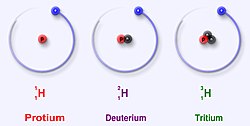 Isotope nuclides having the same atomic number but different mass numbers
 combustible fuel containing hydrocarbons formed by natural processes such as anaerobic decomposition of buried dead organisms, examples being coal, petroleum and natural gas
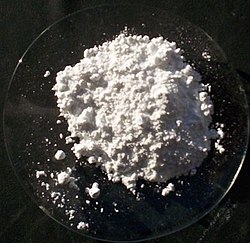 Calcium carbonate chemical compound
 variety of corundum, mineral, gemstone
 one of the three main rock types; formed through the cooling and solidification of magma or lava
 place where water flows over a steep or vertical drop
 Sedimentary rock rock formed by the deposition of material
 mafic igneous rock
 mineral, calcium sulfate with bounded water
 low area between hills, often with a river running through it
 Phylum main taxonomic rank (under the rank kingdom)
 chemical compound
 organisms that drift and are incapable of active self-propulsion against currents
 Earth's crust Earth's outer layer
 molten rock expelled by a volcano during an eruption
 high flat terrain
 natural void under the Earth's surface
 mixture of molten or semi-molten rock, volatiles and solids that is found beneath the surface of the Earth
 Internal structure of Earth inner structure of the planet Earth, consisting of several concentric spherical layers
 Metamorphic rock rock arising from metamorphism of original rock under high heat and pressure
… and 1,086 more Legendary cards to discover in the game.
Epics 2,646
- Engineering geology — application of the geologic sciences to engineering practice
- Geosyncline — obsolete geological concept
- Index fossil — fossils used to define and identify geologic periods
- History of geology — history of the scientific study of the origin, history, and structure of the Earth
- Vein (geology) — sheetlike body within a rock
- Basement (geology) — in geology, the crystalline rocks lying above the mantle and beneath all other rocks and sediments
- Diapir — Type of geologic intrusion in which a more mobile and ductily deformable material is forced into brittle overlying rocks
- Geodynamics — subfield of geophysics dealing with dynamics of the Earth
- Facies — manifestation of character, reflecting conditions of origin of rock strata
- Permeability — measure of the ability of a porous material to allow fluids to pass through it
- Earth's surface — term for the surface of the Earth
- Water content — quantity of water contained in a material
- Triclinic crystal system — lattice point group
- Drilling fluid — aid for drilling boreholes into the ground
- Grain boundary — concept in materials science: the interface between two grains, or crystallites, in a polycrystalline material
- Contamination — presence of an unwanted constituent, harmful substance or impurity in a material, physical body, or environment
- Petroleum reservoir — reservoir rock filled with hydrocarbons
- Perovskite structure — type of crystal structure
- Mineral deposit — natural concentration of raw materials in the earth's crust, the mining of which is economically worthwhile
- Ichthammol — chemical mixture
- Microcline — feldspar, tectosilicate mineral
- Mantle convection — slow creeping motion of Earth's solid silicate mantle caused by convection currents carrying heat from the interior to the planet's surface
- Terra rossa — limestone-derived soil type of the Mediterranean region
- Staurolite — nesosilicate mineral
… and 2,622 more Epic cards to discover in the game.
Related topics
- Rocks and minerals 2,957 cards
- Palaeontology 2,795 cards
- Chemistry 11,212 cards
- Geography 23,482 cards
- Earth science 585 cards
- Volcanoes 2,042 cards
- Earthquakes 1,085 cards
- Mining 3,530 cards


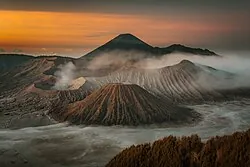
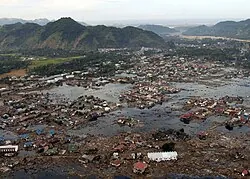

In the Science booster
 Science 282,135 cards ›
About
Mythic 81 · Legendary 1,110 · Epic 2,646 · Rare 4,387 · Common 2,969
Fame score: Wikipedia page views (July 2015 – October 2026, 39 languages). Updated .
All these cards are won by opening boosters in Did you know Cards, the free card game where you learn as you play. All topics ›
All 11,193 “Geology” cards in the game