Rocks and minerals: the most famous cards
The free Wikipedia card game and general-knowledge games
2,957 cards
Mythics 47
 naturally occurring solid aggregate of one or more minerals or mineraloids
 chemical element with symbol C and atomic number 6; common element of all known life
 chemical element with symbol S and atomic number 16
 chemical element with symbol Zn and atomic number 30
 chemical element with symbol Sn and atomic number 50
 chemical element with symbol Co and atomic number 27
 chemical element with symbol Cr and atomic number 24
 chemical element, symbol Mn and atomic number 25
 chemical element with symbol Pd and atomic number 46
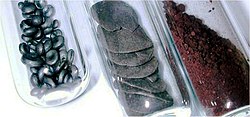 chemical element with symbol Se and atomic number 34
 Quartz mineral made of silicon and oxygen
 Antimony chemical element with symbol Sb and atomic number of 51
 sedimentary rocks made of the chemical substance calcium carbonate
 chemical element with symbol Ir and atomic number 77
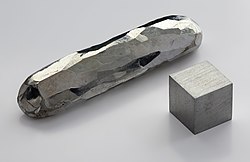 chemical element with symbol Cd and atomic number of 48
 green gemstone, a beryl variety
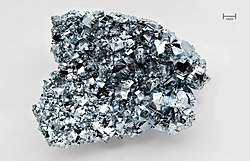 chemical element with symbol Os and atomic number 76
 Amethyst mineral of quartz variety
 chemical element with symbol Hg and atomic number 80
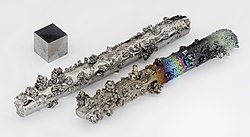 chemical element with symbol W and atomic number 74
 naturally occurring usually inorganic substance that has a (more or less) definite chemical composition and a crystal structure
 Diamagnetic chemical element with symbol Bi and atomic number 83
 common type of intrusive, felsic, igneous rock with grained texture
 chemical element with symbol Mo and atomic number 42
… and 23 more Mythic cards to discover in the game.
The 2,957 cards of Did you know Cards linked to “Rocks and minerals”, those closest to the topic first, then by fame (how often their Wikipedia article is read, and in how many languages): Rock, Carbon, Sulfur, Zinc… The more famous the subject, the rarer its card.
Legendaries 383
 rock-forming minerals with predominantly silicate anions
 Graphite allotrope of carbon, mineral, substance
 solid material whose constituent atoms, molecules, or ions are arranged in an ordered lattice extending in all three spatial dimensions
 variety of corundum, mineral, gemstone
 one of the three main rock types; formed through the cooling and solidification of magma or lava
 Sedimentary rock rock formed by the deposition of material
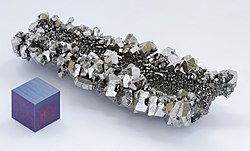 chemical element with symbol Nb and atomic number 41
 mafic igneous rock
 mineral, calcium sulfate with bounded water
 molten rock expelled by a volcano during an eruption
 chemical element with symbol Te and atomic number 52
 chemical element with symbol In and atomic number 49
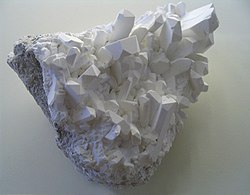 Borax boron compound, a salt of boric acid
 Opal silica mineraloid
 Metamorphic rock rock arising from metamorphism of original rock under high heat and pressure
 Agate chalcedony variety
 iron(II) disulfide mineral
 nesosilicate mineral
 Mica group of phyllosilicate minerals
 chemical element with symbol Re and atomic number 75
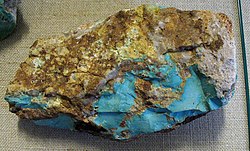 opaque, blue-to-green mineral
 Aluminium oxide chemical compound
 hydrous magnesium phyllosilicate mineral
 compound that is not organic: i.e. does not contain carbon with exceptions e.g. CO, carbon dioxide, disulfide and diselenide, carbides, HCN, carbonic acid, cyanic, isocyanic and fulminic acids and carbonates, hydrogen carbonates, cyanides, cyanates
… and 359 more Legendary cards to discover in the game.
Epics 838
- Lead dioxide — chemical compound
- Chemical structure — spatial arrangement of atoms in a molecule and the chemical bonds
- Lattice energy — energy change upon formation of one mole of a crystalline compound
- Facies — manifestation of character, reflecting conditions of origin of rock strata
- Oil reserves — proven oil reserves in the ground
- Triclinic crystal system — lattice point group
- Grain boundary — concept in materials science: the interface between two grains, or crystallites, in a polycrystalline material
- Gold nugget — piece of gold
- Perovskite structure — type of crystal structure
- Mineral deposit — natural concentration of raw materials in the earth's crust, the mining of which is economically worthwhile
- Trigonal crystal system — lattice point group
- Sillimanite — nesosilicate mineral
- Microcline — feldspar, tectosilicate mineral
- Cristobalite — silica mineral, polymorph of quartz
- Staurolite — nesosilicate mineral
- Enstatite — pyroxene mineral
- Diaspore — hydroxide mineral
- Ozokerite — naturally occurring odoriferous mineral wax or paraffin
- Phosphophyllite — mineral, hydrated zinc iron phosphate
- Covellite — sulfide mineral
- Chernobylite — technogenic mineral
- Carnallite — halide mineral
- Gibbsite — form of aluminium hydroxide, mineral
- Forsterite — magnesium end-member of olivine, nesosilicate mineral
… and 814 more Epic cards to discover in the game.
Related topics
- Gemology and jewelry 917 cards
- Mining 3,530 cards
- Materials 655 cards
- Chemical elements 361 cards


In the Animals booster
 Animals 61,077 cards ›
About
Mythic 47 · Legendary 383 · Epic 838 · Rare 1,364 · Common 325
Fame score: Wikipedia page views (July 2015 – October 2026, 39 languages). Updated .
All these cards are won by opening boosters in Did you know Cards, the free card game where you learn as you play. All topics ›
All 2,957 “Rocks and minerals” cards in the game