Astronomy: the most famous cards
The free Wikipedia card game and general-knowledge games
12,018 cards
Mythics 140
 Black hole astronomical object so massive, that anything falling into it, including light, cannot escape its gravity
 astronomical object consisting of a luminous spheroid of plasma held together by its own gravity
 1473 – 1543 Polish mathematician and astronomer
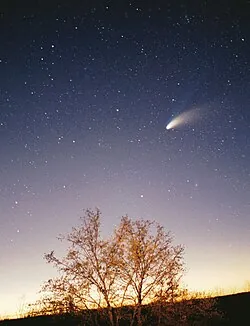 Comet icy small astronomical object
 unit of astronomical length, defined as the distance that light travels in the vacuum in one year
 1572 – 1630 German mathematician and astronomer
 1934 – 1996 American astrophysicist, cosmologist and author
 c. 100 – c. 170 2nd-century Roman mathematician, astronomer, geographer
 c. 780 – c. 850 9th-century Persian mathematician and astronomer
 Astronomical unit mean distance between Earth and the Sun, common length reference in astronomy
 The Sun, its planets and their moons
 Earth's only natural satellite
 second planet from the Solar System, tellurian and very similar to Earth
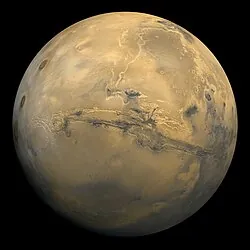 fourth planet from the Sun, tellurian and orange-red due to iron oxide
 fifth planet in the Solar System and largest among all; gaseous giant mainly composed of hydrogen and helium
 sixth planet in the Solar System, with a ring system mainly composed of ice particles
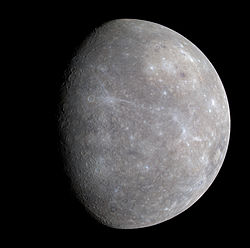 first planet from the Solar System and smallest among all, tellurian and with extreme temperatures
 dwarf planet in the Solar System
 Planet celestial body directly orbiting a star or stellar remnant
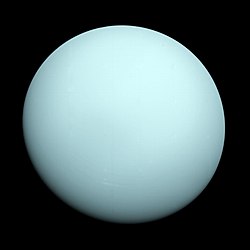 seventh planet in the Solar System, mainly composed of hydrogen and helium
 galaxy containing our Solar System
 eighth and farthest planet from the Sun in the Solar System, mainly composed of ice and rock
 Galaxy large gravitationally bound system of stars and interstellar matter
 speed of electromagnetic waves in vacuum
… and 116 more Mythic cards to discover in the game.
The 12,018 cards of Did you know Cards linked to “Astronomy”, those closest to the topic first, then by fame (how often their Wikipedia article is read, and in how many languages): Black hole, Star, Nicolaus Copernicus, Comet… The more famous the subject, the rarer its card.
Legendaries 1,380
 astronomical event where the Sun is directly above the Earth's equator
 person who commands, pilots, or serves as a crew member of a spacecraft
 astronomical model in which the Earth and planets revolve around a relatively stationary Sun at the center of the Solar System
 pioneer astronomer who formulated zero, quadratic rules, and earth's rotation
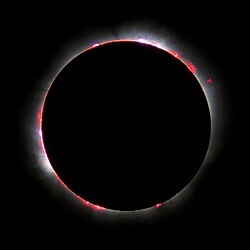 astronomical event where one body hides another
 Winter solstice astronomical phenomenon that occurs in December in Northern Hemisphere and in June in Southern Hemisphere
 Astronomical object physical body of astronomically-significant size, mass, or role, naturally occurring in a universe
 Arab physicist, mathematician and astronomer
 French mathematician and astronomer
 term of astronomy, a horizontal angle from a cardinal direction
 Dutch mathematician, physicist and astronomer
 American astronomer
 Russian and Soviet rocket scientist and pioneer of the astronautic theory
 Redshift relative increase in wavelength of electromagnetic radiation in the emission spectrum of astronomical objects
 Atmosphere layer of gases surrounding a material body
- celestial body that orbits a planet or other smaller body in turn directly orbiting a star
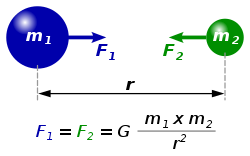 classical mechanics physical law
 scientific laws describing motion of planets around the Sun
 region of the atmosphere and outer space visible from the surface of the Earth
 frequency change of a wave for observer relative to its source
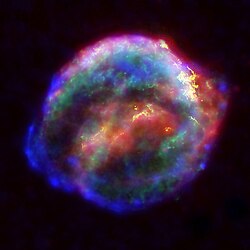 supernova visible from Earth in the 17th century
 unit of time
 the circumstellar disk (accumulation of matter) in an orbit around Sun between those of Mars and Jupiter
 NASA probe that visited Pluto and Kuiper belt object 486958 Arrokoth
… and 1,356 more Legendary cards to discover in the game.
Epics 2,759
- Astronomical spectroscopy — science of temporal, spatial, and spectral distributions of radiation
- Indian astronomy — astronomy on the Indian subcontinent
- Infrared astronomy — observational astronomy of emissions over the wavelength band 0.75 to 300 micrometers
- Large Binocular Telescope — telescope for optical astronomy on Mount Graham, Arizona, USA
- X-ray astronomy — branch of astronomy that uses X‑ray observation
- James Bradley — English astronomer; Astronomer Royal
- Fermi Gamma-ray Space Telescope — space telescope for gamma-ray astronomy launched in 2008
- Russell A. Hulse — American astronomer
- Christopher Clavius — German astronomer and mathematician
- Paolo dal Pozzo Toscanelli — Florentine astronomer
- Egyptian astronomy — overview of astronomy in Ancient Egypt
- Beatrice Tinsley — New Zealand astronomer
- Chinese astronomy — astronomy as practiced in historical China
- Johann Franz Encke — German astronomer
- Planet X — hypothetical planet in the Solar system
- Aditya-L1 — Indian solar probe
- Blueshift — any decrease in wavelength (increase in frequency)
- Tiangong-2 — former Chinese space station
- Absorption spectroscopy — spectroscopic techniques that measure the absorption of radiation
- Claimed moons of Earth — claims that Earth may have other natural satellites
- Elliptic orbit — Kepler orbit with an eccentricity of less than 1
- Great conjunction — conjunction of planets Jupiter and Saturn
- Gliese 581g — disproven exoplanet
- Phaeton (hypothetical planet) — hypothetical former Solar System planet
… and 2,735 more Epic cards to discover in the game.
Related topics
- Solar System 4,392 cards
- Physics 12,653 cards
- Spaceflight 7,319 cards
- Moon 2,169 cards
- Astronomical objects 738 cards
- Physicists 3,916 cards
- Fundamental astronomy 219 cards
- History of science 2,519 cards


In the Science booster
 Science 282,135 cards ›
About
Mythic 140 · Legendary 1,380 · Epic 2,759 · Rare 5,839 · Common 1,900
Fame score: Wikipedia page views (July 2015 – October 2026, 39 languages). Updated .
All these cards are won by opening boosters in Did you know Cards, the free card game where you learn as you play. All topics ›
All 12,018 “Astronomy” cards in the game