Cryptography: the most famous cards
The free Wikipedia card game and general-knowledge games
741 cards
Mythics 16
 digital currency not reliant on a central authority
 positive integer with exactly two divisors, 1 and itself
 Meta Platforms-owned mobile instant messenger and social media service
 1912 – 1954 English computer scientist
 1791 – 1871 English mathematician, philosopher, and engineer
 daemon and utilities for an anonymizing network
 digital cash system and associated currency
 instant messaging service
 distributed data store for digital transactions
 organization that publishes leaks provided by anonymous sources
 virtual network extending a single private network across a public network like the Internet, appearing to users as a private network
 HTTP over Transport Layer Security (TLS)
 2003 novel by Dan Brown
 German cipher machine
 2006 film directed by Ron Howard
 illustrated codex hand-written in an unknown writing system
The 741 cards of Did you know Cards linked to “Cryptography”, those closest to the topic first, then by fame (how often their Wikipedia article is read, and in how many languages): Cryptocurrency, Prime number, WhatsApp, Alan Turing… The more famous the subject, the rarer its card.
Legendaries 203
 cryptocurrency
 English cryptanalyst
 Cryptographic hash function special class of hash function that has certain properties which make it suitable for use in cryptography
 Early British cryptanalysis computer
 Cryptanalysis study of analyzing information systems in order to discover their hidden aspects
 history of the cryptocurrency
 tree data structure whose nodes are recursively cryptographically hashed
 Quantum cryptography the science of exploiting quantum mechanical properties to perform cryptographic tasks
 Salt secret added to an input such as a password prior to being hashed with a cryptographic hash function and stored alongside the hashed output
 piece of information in cryptography
 Polish mathematician and cryptologist
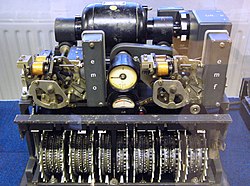 Cryptology science that deals with the encryption and decryption of information
 Israeli cryptographer
 fictitious name that a person or group assumes for a particular purpose, which differs from their original or true name (orthonym)
 computational device relying on quantum mechanics
 Password short, shared secret used for user authentication to prove identity or access approval
 simple and widely known encryption technique
 process of hiding information into an alternative form known as ciphertext
 Hash function type of function that maps data of arbitrary size to data of fixed size
 associates data values with key values - a lookup table
 true when either but not both inputs are true
 function which gives the number of integers relatively prime to and not greater than its input
 simple type of polyalphabetic encryption system
 scheme for the transfer of quantum information from one system to a remote one using entanglement
… and 179 more Legendary cards to discover in the game.
Epics 281
- Cryptocurrency mining — generation of new monetary units through computing cryptographic hashes of transaction data
- Martin Edward Hellman — American cryptologist
- Daniel J. Bernstein — American German mathematician, cryptologist and programmer
- Polyalphabetic cipher — term in cryptography
- Blaise de Vigenère — French cryptographer
- Ralph Merkle — American cryptographer and cryonicist
- Polkadot — blockchain network and its cryptocurrency, DOT
- Henryk Zygalski — Polish mathematician and cryptologist
- Bitcoin Core — cryptocurrency wallet and node for Bitcoin
- David Chaum — American computer scientist and cryptographer
- William Frederick Friedman — American cryptologist
- Cryptocat — open source encrypted chat application
- RIPEMD — cryptographic hash function
- Jerzy Różycki — Polish cryptographer
- Code (cryptography) — cipher that operates on semantic tokens, rather than individual symbols or fixed-size blocks
- Secure cryptoprocessor — device used for encryption
- Blowfish — encryption method
- Directory service — service that maps the names of network resources to their respective network addresses
- Stream cipher — symmetric key cipher where plaintext digits are combined with a pseudorandom cipher digit stream
- Dictionary attack — technique for defeating a cipher or authentication mechanism by trying to determine its decryption key or passphrase by trying hundreds or sometimes millions of likely possibilities, such as words in a dictionary
- Aircrack-ng — hacker tool targeting Wi-Fi connections
- John the Ripper — password-cracking software application
- LastPass — password management software
- Ciphertext — encrypted information
… and 257 more Epic cards to discover in the game.
Related topics
- Computer security 1,235 cards
- Cryptocurrency 235 cards
- Computer networking 882 cards
- Mass surveillance 275 cards
- Free and open-source software 1,635 cards


In the Science booster
 Science 282,135 cards ›
About
Mythic 16 · Legendary 203 · Epic 281 · Rare 207 · Common 34
Fame score: Wikipedia page views (July 2015 – October 2026, 39 languages). Updated .
All these cards are won by opening boosters in Did you know Cards, the free card game where you learn as you play. All topics ›
All 741 “Cryptography” cards in the game