Mass surveillance: the most famous cards
The free Wikipedia card game and general-knowledge games
275 cards
Mythics 19
 small piece of data sent from a website and stored on the user's computer by the user's web browser
 born 1946 43rd President of the United States
 born 1953 General Secretary of the Chinese Communist Party since 2012
 1903 – 1950 British writer and journalist
 born 1965 Syrian convicted fugitive and former President of Syria from 2000 to 2024
 1949 dystopian social science fiction novel by George Orwell
 born 1983 American whistleblower and former NSA contractor
 1900 – 1945 German Nazi politician; leader of the German SS & main architect of the Holocaust
 1941 – 2025 Vice President of the United States from 2001 to 2009
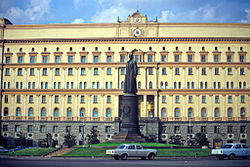 main Soviet security agency from 1954 to 1991
 1904 – 1942 German Nazi SS and Gestapo police official and main architect of the Holocaust Genocide
 1914 – 1984 General Secretary of the Communist Party of the Soviet Union
 virtual network extending a single private network across a public network like the Internet, appearing to users as a private network
 1899 – 1953 Soviet politician and NKVD police chief
 HTTP over Transport Layer Security (TLS)
 principal military force of the People's Republic of China
 1895 – 1972 American law enforcement administrator
 1912 – 1994 former leader of East Germany, General Secretary of the Socialist Unity Party
 daemon and utilities for an anonymizing network
The 275 cards of Did you know Cards linked to “Mass surveillance”, those closest to the topic first, then by fame (how often their Wikipedia article is read, and in how many languages): HTTP cookie, George W. Bush, Xi Jinping, George Orwell… The more famous the subject, the rarer its card.
Legendaries 89
 Mass surveillance intricate surveillance of an entire or a substantial fraction of a population
 the process of extracting and discovering patterns in large data sets
 2002 film directed by Steven Spielberg
 12-digit unique identity number for residents of India
 1984 film by Michael Radford
 Surveillance monitoring of behavior, activities, or other changing information, for the purpose of influencing, managing or directing
 foreign intelligence agency of Germany
 1971 film directed by George Lucas
 computer application capable of identifying or verifying an individual person from a digital image
 intelligence-gathering by interception of signals
 civilian intelligence agency and secret police of the People's Republic of China
 national reputation system being developed by the Chinese government
 France's external intelligence agency
 Information privacy appropriate collection, use and dissemination of personal data in products and services, as well as their protection and related legal and political issues
 technology consulting firm from the United States
 type of digital video camera commonly employed for surveillance, and which, unlike analog closed circuit television (CCTV) cameras, can send and receive data via a computer network and the Internet
 personal privacy concerning the storing, repurposing, provision to third parties, and displaying of information pertaining to oneself via Internet
 Social network analysis analysis of social structures using network and graph theory
 Loyalty program customer loyalty program or loyalty card
 US online newspaper
 British philosopher, jurist, and social reformer
 signals intelligence organization of the United States
 official state security service of the German Democratic Republic (East Germany)
 privacy-focused encrypted messaging app
… and 65 more Legendary cards to discover in the game.
Epics 94
- Global surveillance — mass surveillance of entire populations across national borders
- Mass surveillance in China — network of monitoring systems used by the Chinese Communist Party (CCP) and Chinese government to monitor Chinese citizens
- Full body scanner — device that detects objects on or inside a person's body without removing clothes
- Small-world experiment — experiments examining the average path length for social networks
- Mobile phone tracking — identifying the location of a mobile phone
- Differential privacy — statistical privacy protection mechanism
- Criticism of Google — overview of controversies and criticism concerning Google
- Device fingerprint — information collected about a remote computing device for the purpose of full or partial identification
- Tempora — a security electronic surveillance operated by the British Government Communications Headquarters
- Face detection — computer technology to detect presence and location of faces
- Data Privacy Day — holiday
- Clipper chip — chipset that was developed and promoted by the NSA
- Ministry of Industry and Information Technology — people's Republic of China government ministry overseeing information technology, mail, telecommunications and the software industry
- Censorship in Turkey — overview of the censorship in Turkey
- Lantern (software) — Internet censorship circumvention software
- Privacy International — international organisation
- Millimeter wave scanner — whole-body imaging device
- Regulation to Prevent and Combat Child Sexual Abuse — European Union regulation proposal on CSAM detection
- IDEMIA — corporation
- Tracking system — technology system enabling tracking of persons or objects on the move and supplying a timely ordered sequence of location data for further processing
- Secure communication — anonymous communicating between two entities
- Canvas fingerprinting — browser fingerprinting technique
- TAT-14 — former transatlantic telephone cable
- Minds — open source social networking service
… and 70 more Epic cards to discover in the game.
About
Mythic 19 · Legendary 89 · Epic 94 · Rare 61 · Common 12
Fame score: Wikipedia page views (July 2015 – October 2026, 39 languages). Updated .
All these cards are won by opening boosters in Did you know Cards, the free card game where you learn as you play. All topics ›
All 275 “Mass surveillance” cards in the game