Computer security: the most famous cards
The free Wikipedia card game and general-knowledge games
1,235 cards
Mythics 30
 computer server that makes and receives requests on behalf of a user
 short-distance wireless communication protocol
 attempt to trick a person into revealing information
 small piece of data sent from a website and stored on the user's computer by the user's web browser
 1912 – 1954 English computer scientist
 born 1950 American computer pioneer, inventor, computer engineer and programmer; co-founder of Apple Inc.
 satellite constellation; space-based internet communication system
 person who uses technical knowledge to achieve a goal within a computerized system by non-standard means
 daemon and utilities for an anonymizing network
 American multinational technology company, a subsidiary of Alphabet Inc.
 digital cash system and associated currency
 American multinational technology corporation
 born 1983 American whistleblower and former NSA contractor
 instant messaging service
 global system of interlinked hypertext documents accessed via the Internet
 1999 American science fiction action thriller film
 born 1971 Australian editor, publisher, and activist
 development, management, and use of computer-based information systems
 distributed data store for digital transactions
 organization that publishes leaks provided by anonymous sources
 U.S. federal law enforcement agency
 Cloud computing form of Internet-based computing, whereby shared resources, software and information are provided to computers and other devices
 Chinese multinational technology enterprise
 virtual network extending a single private network across a public network like the Internet, appearing to users as a private network
… and 6 more Mythic cards to discover in the game.
The 1,235 cards of Did you know Cards linked to “Computer security”, those closest to the topic first, then by fame (how often their Wikipedia article is read, and in how many languages): Proxy server, Bluetooth, Phishing, HTTP cookie… The more famous the subject, the rarer its card.
Legendaries 357
 Cross-site scripting type of computer security vulnerability typically found in web applications
 someone who explores methods for breaching defenses and exploiting weaknesses in a computer system or network
 August 2014 computer security incident which led to the leaking of celebrity photographs
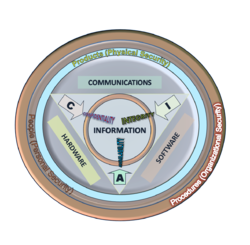 policies and practices adopted to prevent and monitor unauthorized access, misuse, modification, or denial of computer networks and network-accessible resources
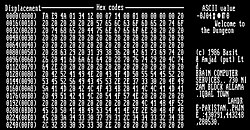 type of computer program that, when executed, replicates itself by modifying other computer programs and inserting its own code
 Malware software that is intentionally hostile, intrusive, or damaging to a computer or network
 data storage virtualization technology
 Firewall network security system that monitors and controls incoming and outgoing network traffic based on predetermined security rules
 common firmware system used to initialize hardware when a computer boots
 type of malware that pretends to be a legitimate program
 Password short, shared secret used for user authentication to prove identity or access approval
 Network switch computer networking device that uses packet switching to forward data; one main component of the Internet infrastructure and of each computer network
 process of hiding information into an alternative form known as ciphertext
 investigation conducted to provide information about the quality of a software product or service under test and enable the business to understand the risks of software implementation
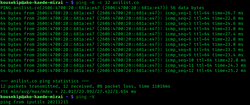 computer network administration utility used to test the reachability of a host
 Virtual machine software that emulates an entire computer, often used to provide a different operating system or hardware architecture than the host system
 standalone malware computer program that replicates itself in order to spread to other computers
 instant messaging and social networking service
 process by which an individual gains access to a computer system
 malware designed to secretly monitor activity and collect information from digital devices without the user's knowledge
 copy of computer data taken and stored so that it may be used to restore the original
 Gateway hardware or software components that connect between two network systems
 Reverse engineering process by which a man-made object is deconstructed to reveal its designs, architecture, code or to extract knowledge from the object
 program to change access permissions of a file or folder
… and 333 more Legendary cards to discover in the game.
Epics 461
- Internet security — branch of computer security specifically related to Internet, often involving browser security and the World Wide Web
- Moxie Marlinspike — American computer security expert
- Wireless security — prevention of unauthorized access or damage to computers or data using wireless networks, which include Wi-Fi networks
- Netstat — command-line utility that displays network connections
- White-box testing — software testing method concerned with the internal workings of the software, as opposed to its functionality
- Computer forensics — branch of digital forensics concerned with the identification, acquisition, preservation, examination, and analysis of digital evidence from computers and computer storage media
- Port forwarding — application of network address translation
- AVG AntiVirus — antivirus software
- ESET NOD32 Antivirus — computer protection software
- Chown — command used on Unix-like systems to change the owner of a file
- BackTrack — Linux distribution
- Payload (computing) — content of a message excluding headers and metadata
- Nagios — computer system and network monitoring application software
- Availability — that a device has the ability to function when needed
- Dictionary attack — technique for defeating a cipher or authentication mechanism by trying to determine its decryption key or passphrase by trying hundreds or sometimes millions of likely possibilities, such as words in a dictionary
- Chroot — operation that changes the apparent root directory in Unix-like systems
- User Account Control — limits rights used by applications on Microsoft Windows
- Aircrack-ng — hacker tool targeting Wi-Fi connections
- Cisco IOS — operating system
- Melissa (computer virus) — mass-mailing macro virus
- Snort — free software intrusion prevention system
- Intrusion prevention system — network security appliances that monitor network or system activities for malicious activity
- Nessus (software) — free network vulnerability scanning tool
- John the Ripper — password-cracking software application
… and 437 more Epic cards to discover in the game.
Related topics
- Cryptography 741 cards
- Computer networking 882 cards
- Internet 3,108 cards
- Free and open-source software 1,635 cards
- Mass surveillance 275 cards
- Cryptocurrency 235 cards


In the Science booster
 Science 282,135 cards ›
About
Mythic 30 · Legendary 357 · Epic 461 · Rare 310 · Common 77
Fame score: Wikipedia page views (July 2015 – October 2026, 39 languages). Updated .
All these cards are won by opening boosters in Did you know Cards, the free card game where you learn as you play. All topics ›
All 1,235 “Computer security” cards in the game