Fundamental astronomy: the most famous cards
The free Wikipedia card game and general-knowledge games
219 cards
Mythics 45
 astronomical object consisting of a luminous spheroid of plasma held together by its own gravity
 Planet celestial body directly orbiting a star or stellar remnant
 Galaxy large gravitationally bound system of stars and interstellar matter
 Season weather- or climate-based subdivision of the year
 Comet icy small astronomical object
 unit of astronomical length, defined as the distance that light travels in the vacuum in one year
 minor planet of the inner Solar System; not a comet
 Dwarf planet planetary-mass object in hydrostatic equilibrium which is not a satellite of another one, but which has still not significantly cleared its neighborhood to dominate it gravitationally and maintain its cohesion
 shape of the sunlit portion of the Moon as viewed from Earth
 Astronomical unit mean distance between Earth and the Sun, common length reference in astronomy
 any planet beyond the Solar System
 The Sun, its planets and their moons
 Earth's only natural satellite
 second planet from the Solar System, tellurian and very similar to Earth
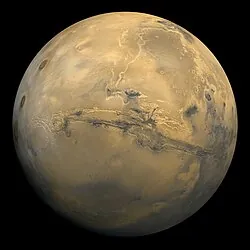 fourth planet from the Sun, tellurian and orange-red due to iron oxide
 fifth planet in the Solar System and largest among all; gaseous giant mainly composed of hydrogen and helium
 sixth planet in the Solar System, with a ring system mainly composed of ice particles
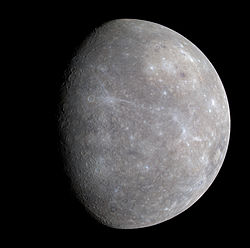 first planet from the Solar System and smallest among all, tellurian and with extreme temperatures
 dwarf planet in the Solar System
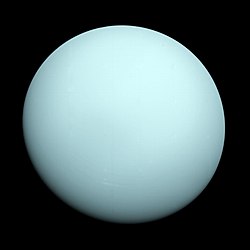 seventh planet in the Solar System, mainly composed of hydrogen and helium
 galaxy containing our Solar System
 eighth and farthest planet from the Sun in the Solar System, mainly composed of ice and rock
 natural science studying celestial objects and phenomena in the cosmos
 fundamental interaction affecting all matter
… and 21 more Mythic cards to discover in the game.
The 219 cards of Did you know Cards linked to “Fundamental astronomy”, those closest to the topic first, then by fame (how often their Wikipedia article is read, and in how many languages): Star, Planet, Galaxy, Season… The more famous the subject, the rarer its card.
Legendaries 137
- celestial body that orbits a planet or other smaller body in turn directly orbiting a star
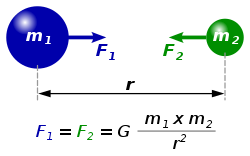 classical mechanics physical law
 scientific laws describing motion of planets around the Sun
 frequency change of a wave for observer relative to its source
 single map of the entire surface of the Earth
 Orbit curved path of an object around a point
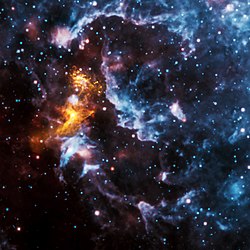 highly magnetized, rapidly rotating neutron star or white dwarf
 Sundial device that tells the time of day by the apparent position of the Sun in the sky
 Terrestrial planet planet that is composed primarily of silicate rocks or metals
 Parallax difference in the apparent position of an object viewed along two different lines of sight
 measure of brightness for celestial objects, as seen from Earth
 standard unit of mass in astronomy which is equal to 1.98892 × 10³⁰ kg
 Orbital period time taken for a given object to make one complete orbit around another object, and applies in astronomy to mostly either planets or asteroids orbiting the Sun, moons orbiting planets, exoplanets orbiting other stars, or binary stars
 imaginary sphere of arbitrarily large radius, concentric with the observer
 four largest moons of Jupiter
 Geoid irregular surface approximating the mean sea level
 galaxy having a number of arms of younger stars that spiral out from the centre containing older ones
 any object in the Solar System that orbits the Sun at a greater average distance than Neptune
 Absolute magnitude logarithmic measure of the luminosity of a celestial object
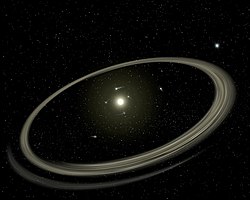 Planetary system set of non-stellar objects in orbit around a star
 astronomical equivalent of longitude
- astronomical coordinate
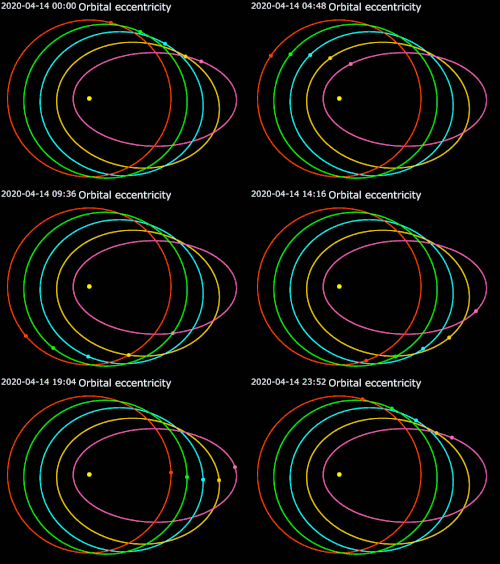 Orbital eccentricity parameter that determines the amount by which an orbit deviates from a perfect circle
 large group of stars
… and 113 more Legendary cards to discover in the game.
Epics 29
- Flatness — measure of compression of an ellipse or ellipsoid of revolution; property of having one dimension significantly less than the rest
- Hour angle — unit of angle
- Kepler's equation — equation in orbital mechanics
- Laplace–Runge–Lenz vector — vector used chiefly to describe the shape and orientation of the orbit of one astronomical body around another, such as a planet revolving around a star
- Very-long-baseline interferometry — type of astronomical interferometry used in radio astronomy
- Kepler orbit — describes the motion of an orbiting body as an ellipse, parabola, or hyperbola
- Solar apex — apparent direction of motion of the sun
- Galactic plane — plane on which the majority of a disk-shaped galaxy's mass lies
- Large quasar group — large astronomical structure
- Shell theorem — simplified gravity models for objects inside or outside a spherically symmetrical body
- History of gravitational theory — theories in physics that postulate mechanisms of interaction governing the movements of bodies with mass
- Tully–Fisher relation — trend in astronomy
- Transit of Earth from Mars — astronomical event in which the Earth comes between Mars and the Sun
- Eccentricity vector — in celestial mechanics, a dimensionless vector with direction pointing from apoapsis to periapsis
- Ecliptic pole — direction of imaginary projection onto the remote celestial sphere of the line perpendicular to planet Earth's orbital plane and passing though the orbital center
- Oort constants — empirically derived parameters A and B that characterize the differential rotational properties of our galaxy at the position of our Sun
- Planisphere — class of star chart
- Equatorial mount — mounting system for camera or telescope
- Yarkovsky effect — force acting on a rotating body in space caused by the anisotropic emission of thermal photons, which carry momentum
- Hubble's constant — constant of proportionality occurring in Hubble's law, ca. 70 (km/s)/Mpc; the value of the Hubble parameter in the present time
- Diurnal motion — the apparent motion of celestial objects around Earth due to the planet's rotation
- Ultraviolet astronomy — observational astronomy performed over the ultraviolet range from 10 nm to 400 nm
- Schmidt–Cassegrain telescope — compact telescope design
- Astronomical instrument — instrument used in astronomy
… and 5 more Epic cards to discover in the game.
In the Science booster
 Science 282,135 cards ›
About
Mythic 45 · Legendary 137 · Epic 29 · Rare 6 · Common 2
Fame score: Wikipedia page views (July 2015 – October 2026, 39 languages). Updated .
All these cards are won by opening boosters in Did you know Cards, the free card game where you learn as you play. All topics ›
All 219 “Fundamental astronomy” cards in the game