Solar System: the most famous cards
The free Wikipedia card game and general-knowledge games
4,392 cards
Mythics 26
 minor planet of the inner Solar System; not a comet
 space probe launched by NASA to study the outer Solar System, furthest spacecraft from Earth
 theoretical cloud of planetesimals at the far edge of the solar system
 area of the Solar System beyond the planetary orbits comprising small bodies
 Planet celestial body directly orbiting a star or stellar remnant
 Month irregular unit of time dividing a calendar year
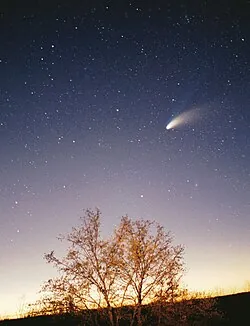 Comet icy small astronomical object
 Supernova star exploding at the end of its stellar lifespan
 Dwarf planet planetary-mass object in hydrostatic equilibrium which is not a satellite of another one, but which has still not significantly cleared its neighborhood to dominate it gravitationally and maintain its cohesion
 shape of the sunlit portion of the Moon as viewed from Earth
 Astronomical unit mean distance between Earth and the Sun, common length reference in astronomy
 natural phenomenon wherein the Sun is obscured by the Moon
 tallest volcano on Mars
 1572 – 1630 German mathematician and astronomer
 rapidly rotating storm system that forms in the tropics
 1912 – 1977 German and later American aerospace engineer and space architect
 life that does not originate from Earth
 first Moon landing and fifth crewed flight of the United States Apollo program
 gas layer surrounding Earth
 Aurora natural light display that occurs in the sky, primarily at high latitudes (near the Arctic and Antarctic on Earth) or even on other planets
 Lunar eclipse when the Moon passes directly behind the Earth
 rise and fall of sea levels caused by the combined effects of the gravitational forces exerted by the Moon and the Sun and the rotation of the Earth
 1961–1972 American human spaceflight program
 2015 film directed by Ridley Scott
… and 2 more Mythic cards to discover in the game.
The 4,392 cards of Did you know Cards linked to “Solar System”, those closest to the topic first, then by fame (how often their Wikipedia article is read, and in how many languages): Asteroid, Voyager 1, Oort cloud, Kuiper Belt… The more famous the subject, the rarer its card.
Legendaries 309
- space probe launched by NASA to study the outer Solar System, second furthest spacecraft from Earth after Voyager 1
 any object in the Solar System that orbits the Sun at a greater average distance than Neptune
 object in the Solar System that is neither a planet, nor a dwarf planet, nor a satellite
 celestial body that orbits a planet or other smaller body in turn directly orbiting a star
 the circumstellar disk (accumulation of matter) in an orbit around Sun between those of Mars and Jupiter
 NASA probe that visited Pluto and Kuiper belt object 486958 Arrokoth
 lunar phase: completely illuminated disc
 Moon of Saturn natural satellites of the planet Saturn
 one of five positions in an orbital configuration of two large bodies where a small object can maintain a stable relative position
 Terrestrial planet planet that is composed primarily of silicate rocks or metals
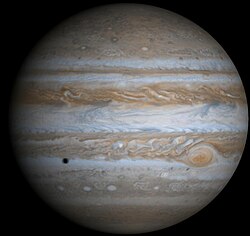 Gas giant giant planet which mainly consist of light elements such as hydrogen and helium
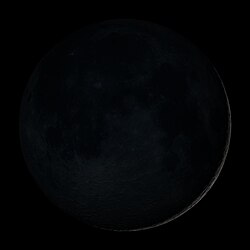 phase of the Moon
- coincidence of a full moon with the closest approach the Moon makes to the Earth
 American scientific program consisting of the probes Voyager 1 and Voyager 2
 Sunlight electromagnetic radiation given off by the Sun
 NASA spacecraft orbiting the planet Jupiter
 hypothesis that life exists throughout the Universe, distributed by space dust, meteoroids, asteroids, comets, planetoids, or carrying unintended contamination by microorganisms
 American robotic rover exploring Gale Crater on Mars
 Orbital period time taken for a given object to make one complete orbit around another object, and applies in astronomy to mostly either planets or asteroids orbiting the Sun, moons orbiting planets, exoplanets orbiting other stars, or binary stars
 India's second lunar exploration mission
 NASA space probe launched in March 1972
 four largest moons of Jupiter
 celestial event caused by streams of meteoroids entering Earth's atmosphere
 extra full moon that appears in a subdivision of a year: either the third of four full moons in a season, or a second full moon in a month of the common calendar
… and 285 more Legendary cards to discover in the game.
Epics 714
- Phaeton (hypothetical planet) — hypothetical former Solar System planet
- Comet tail — dust or gases blown off a comet by solar wind in the inner solar system, leaving a visible trail
- Inferior and superior planets — classification of the planets of the Solar System based on the position of their orbits with respect to that of the Earth
- Aditya-L1 — Indian solar probe
- Claimed moons of Earth — claims that Earth may have other natural satellites
- Great conjunction — conjunction of planets Jupiter and Saturn
- Chang'e 3 — lunar exploration mission operated by the China National Space Administration
- Atmosphere of the Moon — very scant presence of gases surrounding the Moon
- Chandrayaan programme — India's lunar space programme
- IAU definition of planet — definition of a planet as a body orbiting the Sun, in hydrostatic equilibrium, having cleared the neighborhood around its orbit; ratified by the IAU in August 2006, thereby reclassifying Pluto as a dwarf planet instead
- Ranger program — series of uncrewed space missions by the United States in the 1960s
- Mars Polar Lander — robotic spacecraft lander launched by NASA on January 3, 1999
- Beresheet — Israeli space probe which failed to land on the Moon in 2019
- Surveyor 3 — third lander of the American uncrewed Surveyor program sent to explore the surface of the Moon
- Pioneer anomaly — observed deviation from predicted accelerations of the Pioneer 10 and Pioneer 11 spacecraft
- Coma (comet) — cloud of gas or a trail around a comet or asteroid
- Gravitation of the Moon
- Achondrite — meteorites that show signs of differentiation (no chondrules)
- Flag of Mars — flag designs intended to be used on Mars, or simply representing the planet
- Lunar orbit — orbit of an object around the Moon
- Surveyor 1 — US unmanned lunar lander
- Deep Space Climate Observatory — American solar research spacecraft
- Zond program — name given to two distinct series of Soviet uncrewed space programs undertaken from 1964 to 1970
- Chang'e 1 — Chinese lunar orbiter
… and 690 more Epic cards to discover in the game.
Related topics
- Astronomy 12,018 cards
- Moon 2,169 cards
- Mars 962 cards
- Spaceflight 7,319 cards
- Astronomical objects 738 cards
- Fundamental astronomy 219 cards
- Eclipses 682 cards


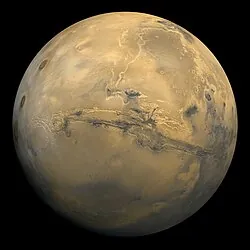


In the Nature booster
 Nature 297,777 cards ›
About
Mythic 26 · Legendary 309 · Epic 714 · Rare 2,877 · Common 466
Fame score: Wikipedia page views (July 2015 – October 2026, 39 languages). Updated .
All these cards are won by opening boosters in Did you know Cards, the free card game where you learn as you play. All topics ›
All 4,392 “Solar System” cards in the game