 scale(1)'%3E%3Cg transform='rotate(-8 256 256)'%3E%3Crect x='140' y='88' width='250' height='350' rx='27.5' fill='%232a4b8d'/%3E%3Crect x='131' y='81' width='250' height='350' rx='27.5' fill='%23ffffff'/%3E%3Cpath transform='translate(194.09 355.96) scale(0.29 -0.29)' d='M127 570Q127 554 132 545Q136 536 136 516Q136 497 121 486Q106 475 83 475Q65 475 46 490Q26 505 26 533Q26 559 40 578Q54 598 79 619Q126 658 216 658Q302 658 352 616Q401 574 401 505Q401 468 383 440Q365 411 339 389Q313 367 288 348Q274 338 260 324Q245 310 235 288Q225 265 225 229V216Q225 197 219 190Q213 182 192 182Q172 182 166 191Q160 200 160 216V231Q160 252 163 277Q166 302 181 332Q196 362 231 394Q257 417 272 446Q286 475 286 512Q286 556 267 589Q248 622 206 622Q173 622 150 606Q127 591 127 570Z' fill='%233366cc'/%3E%3Cpath d='M250.34 308.01 Q258.2 337.2 287.39 345.06 Q258.2 352.91 250.34 382.1 Q242.49 352.91 213.3 345.06 Q242.49 337.2 250.34 308.01Z' fill='%23f2b01e'/%3E%3Cg id='k' transform='translate(151 127) scale(0.036 -0.036)' fill='%233366cc'%3E%3Cpath transform='translate(0 0)' d='M185 0Q170 0 144 0Q119-1 93-1Q67-1 49-2Q31-2 31-2Q24 3 24 16Q24 28 31 32Q59 34 77 39Q95 44 104 62Q114 81 114 122V523Q114 565 104 583Q95 601 77 606Q59 612 31 613Q24 618 24 630Q24 643 31 647Q31 647 49 646Q67 646 93 646Q119 646 144 646Q170 645 185 645Q215 645 248 646Q280 646 320 646Q443 646 524 600Q605 555 646 478Q686 402 686 309Q686 233 664 174Q641 114 605 82Q552 36 482 17Q413-2 347-2Q327-2 296-2Q266-1 236 0Q205 0 185 0ZM254 119Q254 69 276 54Q298 40 350 40Q379 40 411 52Q443 65 471 94Q499 122 517 169Q535 216 535 284Q535 341 528 398Q521 454 500 500Q478 547 434 576Q390 604 316 604Q289 604 272 587Q254 570 254 529Z'/%3E%3Cpath transform='translate(700 0)' d='M387 122Q387 81 394 62Q402 44 423 39Q444 34 484 32Q489 28 489 16Q489 3 484-2Q447-1 406 0Q366 0 325 0Q274 0 230 0Q187-1 150-2Q146 3 146 16Q146 28 150 32Q190 34 211 39Q232 44 240 62Q247 81 247 122V259Q247 278 246 288Q244 299 240 308Q236 317 227 332L100 547Q83 575 70 588Q57 602 42 607Q27 612 6 613Q2 618 2 630Q1 643 5 647Q20 647 46 646Q72 646 100 646Q128 645 147 645Q177 645 209 646Q241 646 271 647Q276 643 276 630Q276 618 271 613Q229 611 224 598Q220 585 236 557L340 373Q353 351 363 370L466 564Q478 587 463 599Q448 611 415 613Q411 618 411 630Q411 643 415 647Q445 646 477 646Q509 645 526 645Q543 645 570 646Q597 646 619 647Q624 643 624 630Q624 618 619 613Q585 610 567 602Q549 594 532 565L404 351Q394 335 390 316Q387 298 387 268Z'/%3E%3Cpath transform='translate(1324 0)' d='M108 523Q108 565 98 583Q89 601 71 606Q53 612 25 613Q18 618 18 630Q18 643 25 647Q45 647 74 646Q102 646 130 646Q159 645 179 645Q199 645 227 646Q255 646 283 646Q311 647 331 647Q339 643 339 630Q339 618 331 613Q304 612 286 606Q267 601 258 583Q248 565 248 523V342Q273 350 299 368Q325 387 374 430Q374 430 386 440Q398 450 416 466Q434 481 452 497Q469 513 481 525Q519 563 520 586Q520 609 476 613Q472 618 472 630Q472 643 476 647Q504 646 536 646Q569 645 599 645Q625 645 650 646Q675 646 694 647Q699 643 699 630Q699 618 694 613Q649 607 606 575Q564 543 520 504L411 407Q403 400 401 392Q399 383 399 378Q399 372 408 360Q416 348 429 333L648 74Q667 51 686 43Q704 35 726 32Q731 28 731 16Q731 3 726-2Q697-1 667 0Q637 0 608 0Q593 0 572 0Q552-1 534-1Q515-1 505-2Q501-2 500 4Q497 32 464 74L313 271Q298 291 284 302Q271 313 248 318V122Q248 81 258 62Q267 44 286 39Q304 34 331 32Q339 28 339 16Q339 3 331-2Q311-1 283-1Q255-1 227 0Q199 0 179 0Q159 0 130 0Q102-1 74-1Q45-1 25-2Q18 3 18 16Q18 28 25 32Q53 34 71 39Q89 44 98 62Q108 81 108 122Z'/%3E%3C/g%3E%3Cuse href='%23k' transform='rotate(180 256 256)'/%3E%3C/g%3E%3C/g%3E%3C/svg%3E) Did you know Cards
Occipital bone
Occipital bone: saucer-shaped membrane bone situated at the back and lower part of the cranium. No. 35,996 of 4,515,532 cards by fame.
Occipital bone: quick facts
- Description
- Saucer-shaped membrane bone situated at the back and lower part of the cranium
- Rarity in the game
- Legendary card
- In its topic
- No. 151 of 987 “Animal anatomy” cards
- Wikipedia
- article in 56 languages
- Wikidata
- Q16317
- Wikipedia page views
- about 13,000 a month (November 2025 – October 2026)
Fame score: Wikipedia page views (July 2015 – October 2026, 39 languages). Updated .
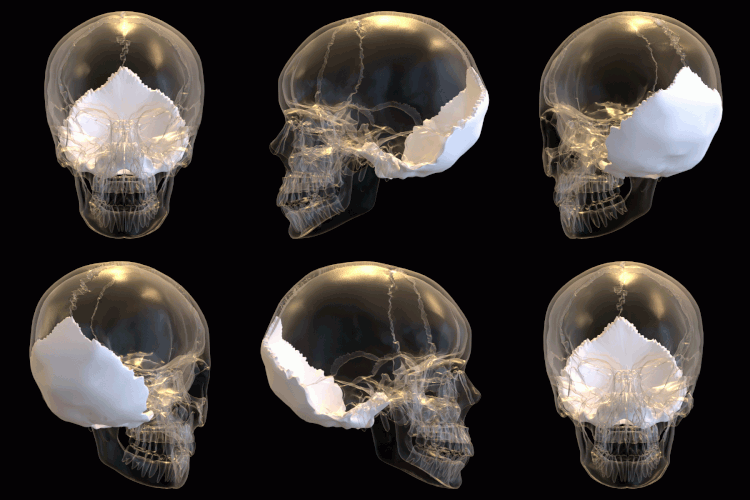

Occipital bone: summary
The occipital bone is a cranial dermal bone and the main bone of the occiput (back and lower part of the skull). It is trapezoidal in shape and curved on itself like a shallow dish. The occipital bone lies over the occipital lobes of the cerebrum. At the base of the skull in the occipital bone, there is a large oval opening called the foramen magnum, which allows the passage of the spinal cord.
Source: Wikipedia (CC BY-SA 4.0)
More cards: Animal anatomy
- Somatosensory system — complex system of sensory neurons and pathways that responds to changes at the surface or inside the body
- Exocrine gland — gland that produces and secretes substances onto an epithelial surface by a duct
- Zygomatic bone — facial bone
- Canine tooth — tooth located between the lateral incisor and the first premolar
- Bulbourethral gland — small exocrine gland in the reproductive system of many male mammals
- Upper extremity — arm (hand + forearm + upper arm + pectoral girdle)
- Dermis — layer of skin between the epidermis (with which it makes up the cutis) and subcutaneous tissues, that primarily consists of dense irregular connective tissue and cushions the body from stress and strain
- Swim bladder — gas-filled organ that contributes to the ability of a fish to control its buoyancy
- Baculum — bone in the penis
- Hip bone — bone of the pelvis
- Intervertebral disc — cartilage of spine
- Wing — aerodynamic surface used by animals and vehicles for flight
- Cartilage — No. 77 of the “Animal anatomy” cards
- Mane (horse) — No. 252 of the “Animal anatomy” cards
- Zona pellucida — No. 303 of the “Animal anatomy” cards
This card's topics
- Medicine (30,515 cards)
- Anatomy (4,492 cards)
- Animal anatomy (987 cards)
- Science (6,388 cards)
“Occipital bone” is one of the 4,515,532 cards of Did you know Cards, the free Wikipedia card game where you learn as you play: every card is a piece of knowledge from Wikipedia. Open boosters, complete your albums and challenge other players to duels.