Ecology: the most famous cards
The free Wikipedia card game and general-knowledge games
1,824 cards
Mythics 13
 scientific study of the relationships between living organisms
 Forest subjective characterization of an area with trees
 Population density measurement of population per unit area or unit volume
 island in western Indonesia, westernmost of the Sunda Islands
 solid or semisolid remains of the food that passes through the bowel, from any animal
 1809 – 1882 English naturalist and biologist
 Nature natural, physical, or material world and its phenomena
 Pollution introduction of contaminants into the natural environment that cause adverse change
 1707 – 1778 Swedish botanist, physician, and zoologist; developed the foundations of modern taxonomy
 Ecosystem community of living organisms together with the nonliving components of their environment, interacting as a system
 form of electromagnetic radiation
 archipelago in the Pacific Ocean, part of Ecuador since 1832
 1817 – 1862 American essayist, poet, and philosopher
The 1,824 cards of Did you know Cards linked to “Ecology”, those closest to the topic first, then by fame (how often their Wikipedia article is read, and in how many languages): Ecology, Forest, Population density, Sumatra… The more famous the subject, the rarer its card.
Legendaries 281
 ecological or environmental area inhabited by a particular species; natural environment in which an organism lives, or the physical environment that surrounds a species population
 ecological state of being unique to a defined geographic location or habitat
 fit of a species living under specific environmental conditions
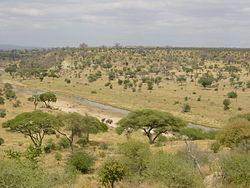 Savanna mixed woodland-grassland ecosystem
 Parasitism relationship between species, where one organism, the parasite, lives on or in another organism, the host, causing it some harm, and is adapted structurally to this way of life
 marine invertebrates of the class Anthozoa
 aspects of the ecosystem
- distinct biological communities that have formed in response to a shared physical climate
 ridge of rock in the sea formed by the growth and deposit of coral
 type of close and long-term biological interaction between two different biological organisms
 organisms that drift and are incapable of active self-propulsion against currents
 tropical coastal vegetation consisting of a shrub or tree that grows in coastal saline or brackish water
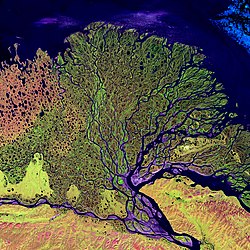 River delta landform that is formed at the mouth of a river
 ensemble of individuals of a species in an area, or their number
 natural form of asexual reproduction in which growth and development of embryos occur without fertilization
 Biomass the mass of living organisms in a given ecosystem or biological material used as a renewable energy source
 Pollination biological pollination process occurring in plants
 biogeochemical cycle by which nitrogen is converted into various chemical forms
 Carnivore organism that eats mostly or exclusively animal tissue
 set of animal species in any particular region and time
 Flora set of plant species in any particular region and time
 animal anatomically and physiologically adapted to eating plant material
 agriculture practices using few energy resources and human intervention
 increase in the number of individuals in a population
… and 257 more Legendary cards to discover in the game.
Epics 538
- Consumer (food chain) — organism in an ecological food chain that receives energy by consuming other organisms
- Population ecology — study of the dynamics of species populations and how these populations interact with the environment
- Climax community — ecological community that has reached its final steady state
- Landscape ecology — science of relationships between ecological processes in the environmental landscape and particular ecosystems
- Energy flow — flow of energy through a food chain, and is the focus of study in ecological energetics
- Ecological community — populations of two or more species in a given area
- Biota (ecology) — plants, animals, fungi and microorganisms of a region
- Urban ecology — area of study in ecology
- Forest ecology — scientific study and subfield of ecology around forest ecosystems
- Dead zone (ecology) — low-oxygen areas in oceans and large lakes caused by nutrient and fertilizer pollution
- Pleistocene Park — ecological experiment
- Ecological resilience — capacity of an ecosystem to respond to a perturbation or disturbance by resisting damage and recovering quickly
- Political ecology — study of political, economic and social factors about environmental issues
- Overpopulation — when a population of a species exceeds the carrying capacity of its ecological niche
- Plant ecology — subdiscipline of ecology, studies the abundance and distribution of plants
- Oxygen cycle — biogeochemical cycle of oxygen within its four main reservoirs: the atmosphere, the biosphere, the hydrosphere, and the lithosphere
- Andean natural region of Colombia — mountainous region of central Colombia - Andes mountain chain
- Sulfur cycle — biogeochemical cycle of sulfur
- Population dynamics — the branch of life sciences studying changes in the size and age composition of populations
- Autotrophy — processes by which organisms use simple inorganic substances as nutrient sources
- Bioindicator — indicator species that can be used to define the status of an environment
- Natural region — region distinguished by its common natural features of geography, geology, and climate
- Wildlife corridor — protected pathway for animals connecting wild territories
- Over exploitation — harvesting a renewable resource to the point of diminishing returns
… and 514 more Epic cards to discover in the game.
Related topics
- Limnology and oceanography 789 cards
- Trees and forests 1,945 cards
- Evolutionary biology 612 cards
- Soil 661 cards



About
Mythic 13 · Legendary 281 · Epic 538 · Rare 656 · Common 336
Fame score: Wikipedia page views (July 2015 – October 2026, 39 languages). Updated .
All these cards are won by opening boosters in Did you know Cards, the free card game where you learn as you play. All topics ›
All 1,824 “Ecology” cards in the game