Limnology and oceanography: the most famous cards
The free Wikipedia card game and general-knowledge games
789 cards
Mythics 18
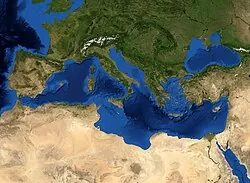 large body of saline water
 larger natural watercourse
 body of relatively still water, localized in a basin
 group of organisms which mostly grow in water and can perform oxygenic photosynthesis
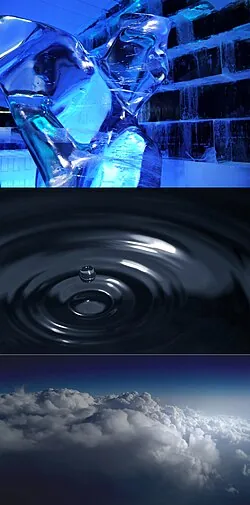 chemical compound whose molecules are formed by two hydrogen atoms and one oxygen atom
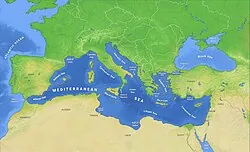 sea between Europe, Africa and Asia
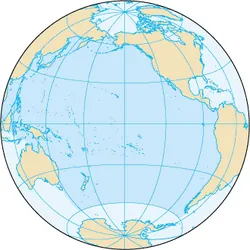 ocean between Asia, Australia and the Americas
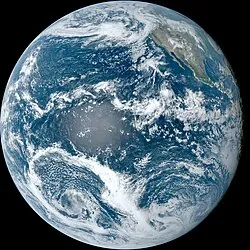 very large body of saline water
 born 1954 Canadian filmmaker and explorer
 Ecosystem community of living organisms together with the nonliving components of their environment, interacting as a system
 Flood overflow of water that submerges land that is usually dry
 extension of the Indian Ocean
 rise and fall of sea levels caused by the combined effects of the gravitational forces exerted by the Moon and the Sun and the rotation of the Earth
 arm of the Atlantic Ocean that separates southern England from northern France
 water frozen into the solid state
 marginal sea of the Atlantic Ocean
 largest of the Great Lakes of North America
 2023 submersible implosion in the North Atlantic Ocean
The 789 cards of Did you know Cards linked to “Limnology and oceanography”, those closest to the topic first, then by fame (how often their Wikipedia article is read, and in how many languages): Sea, River, Lake, Algae… The more famous the subject, the rarer its card.
Legendaries 165
 ridge of rock in the sea formed by the growth and deposit of coral
 area of land where precipitation collects and drains off into a common outlet, such as into a river, bay, or other body of water
 organisms that drift and are incapable of active self-propulsion against currents
 tropical coastal vegetation consisting of a shrub or tree that grows in coastal saline or brackish water
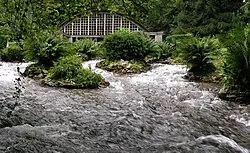 water located beneath the ground surface
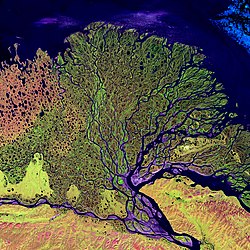 River delta landform that is formed at the mouth of a river
 Estuary type of marine and riverine ecosystem
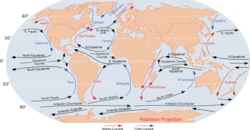 Ocean current continuous flow of ocean water
 Spring terrestrial water source
 biogeochemical cycle by which nitrogen is converted into various chemical forms
 Lagoon shallow body of water separated from larger body of water by a barrier
 body of water connected to an ocean or lake, formed by an indentation of the shoreline
 ecological or environmental area inhabited by a particular species; natural environment in which an organism lives, or the physical environment that surrounds a species population
 Nutrient substance that an organism uses to live
 water from a sea or ocean
 area where land meets the sea or ocean
 coastal area in the Campania region, Italy
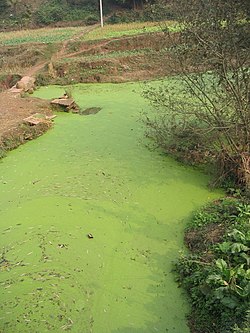 ecosystem response to the introduction or addition of substances
 surface waves that occur on the free surface of bodies of water
 Marsh wetland dominated by herbaceous plants
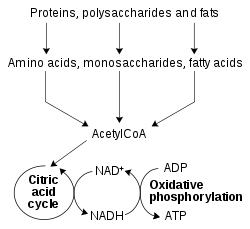 set of metabolic pathways that breaks down molecules into smaller units
 organism that ingests or absorbs organic carbon (rather than fix carbon from inorganic sources such as carbon dioxide) in order to be able to produce energy
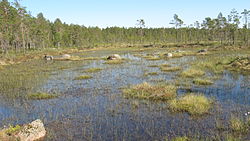 wetland that accumulates peat due to incomplete decomposition of plant leftovers
 Salinity saltiness or amount of salt dissolved in a body of water
… and 141 more Legendary cards to discover in the game.
Epics 228
- Oxygen cycle — biogeochemical cycle of oxygen within its four main reservoirs: the atmosphere, the biosphere, the hydrosphere, and the lithosphere
- Light-dependent reactions — chemical reactions involved in photosynthesis induced by light
- Thermal pollution — degradation of water quality by any process that changes ambient water temperature
- Alkalinity — capacity of water to resist changes in pH that would make the water more acidic
- Energy flow — flow of energy through a food chain, and is the focus of study in ecological energetics
- Ecological community — populations of two or more species in a given area
- World Wetlands Day — environmentally related celebration in February
- Water balance — looks at how water moves in a closed system
- Coastal erosion — loss or displacement of land along a coastline
- Stream gauge — device used to monitor surface water flow
- Drift ice — sea ice that is not attached to land but rather moves on the sea surface in response to wind and ocean currents
- Microphyte — microscopic algae, typically found in freshwater and marine systems, living in both the water column and sediment
- Aphotic zone — portion of a lake or ocean where less than 1% of sunlight penetrates
- Breaking wave — wave that becomes unstable as a consequence of excessive steepness
- Oxygen saturation — relative measure of the amount of oxygen that is dissolved or carried in a given medium
- Milky seas effect — luminous phenomenon in the ocean in which large areas of seawater glow brightly enough at night to be seen by satellites orbiting Earth
- Freshwater ecosystem — subset of Earth's aquatic ecosystems
- Biogeochemistry — study of chemical cycles of the earth that are either driven by or influence biological activity
- Dead zone (ecology) — low-oxygen areas in oceans and large lakes caused by nutrient and fertilizer pollution
- Sapropel — dark-coloured sediments that are rich in organic matter
- Total organic carbon — concentration of organic carbon in a sample
- Agricultural pollution — type of pollution caused by agriculture
- Monterey Bay Aquarium — nonprofit public aquarium in Monterey, California
- Halocline — stratification of a body of water due to salinity differences
… and 204 more Epic cards to discover in the game.
In the Science booster
 Science 282,135 cards ›
About
Mythic 18 · Legendary 165 · Epic 228 · Rare 233 · Common 145
Fame score: Wikipedia page views (July 2015 – October 2026, 39 languages). Updated .
All these cards are won by opening boosters in Did you know Cards, the free card game where you learn as you play. All topics ›
All 789 “Limnology and oceanography” cards in the game