Veterinary medicine: the most famous cards
The free Wikipedia card game and general-knowledge games
1,039 cards
Mythics 10
 infectious disease caused by Borrelia bacteria, spread through the bite of blacklegged ticks
 cancer of plasma cells
 (RS)-pentobarbital group of stereoisomers
 order of insects
 science regarding function of organisms or living systems
 Castration surgical or chemical action that removes use of testicles
 Ehlers-Danlos syndrome group of genetic connective tissue disorders
 deadly viral disease, transmitted through animals
 infection caused by Bacillus anthracis bacteria
 substance used to stimulate the production of antibodies and provide immunity against one or several diseases, agent of a disease, its products, or a synthetic substitute
The 1,039 cards of Did you know Cards linked to “Veterinary medicine”, those closest to the topic first, then by fame (how often their Wikipedia article is read, and in how many languages): Lyme disease, Multiple myeloma, (RS)-pentobarbital, Flea… The more famous the subject, the rarer its card.
Legendaries 150
 Fever common medical sign characterized by elevated body temperature
 decrease in number of red blood cells
 infection caused by any one of several types of swine influenza viruses
 Avian influenza influenza caused by viruses adapted to birds
 antiparasite medication
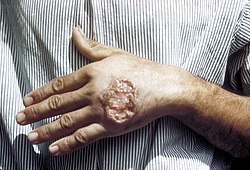 disease caused by parasites of the genus Leishmania
 technique or procedure used in medicine to examine the interior of a hollow organ or cavity of the body
 naturally occurring polysaccharide used in skincare for moisture retention and skin hydration
 infectious and sometimes fatal viral disease that affects cloven-hoofed animals and caused by apthovirus
 Radiology specialty that uses medical imaging to diagnose and treat diseases seen within the body
 a sugar alcohol (polyol) derived from xylose by reduction of the carbonyl group
 chemical compound
 infection caused by Salmonella bacteria
 parasitic disease of tapeworms of the Echinococcus type
 Artificial insemination pregnancy through in vivo fertilization
 Tularemia primary bacterial infectious disease that has material basis in Francisella tularensis, which is transmitted by dog tick bite (Dermacentor variabilis), transmitted by deer flies (Chrysops sp) or transmitted by contact with infected animal tissues
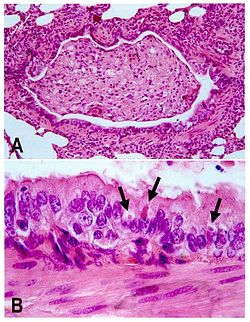 dog disease
 inflammation of the breast
 parasitic disease of humans and other mammals
 parasitic disease due to invasion by Trichinella spp
 bone cancer that is located in bone that has material basis in cells of mesenchymal origin
 disease characterized by miosis (a constricted pupil), partial ptosis (a weak, droopy eyelid), apparent anhydrosis (decreased sweating), with apparent enophthalmos (inset eyeball)
 medical injury
 parasitic ectoparasitic infectious disease that is caused by parasitic dipterous fly larvae (maggots) feeding on the host's necrotic or living tissue
… and 126 more Legendary cards to discover in the game.
Epics 306
- Kennel cough — upper respiratory infection affecting dogs
- Toxocariasis — illness of humans caused by larvae of the dog, the cat or the fox roundworm
- Hypersalivation — excessive production of saliva
- Fasciolosis — parasitic worm infection caused by the common liver fluke Fasciola hepatica as well as by Fasciola gigantica
- Cryptosporidiosis — human disease
- Campylobacteriosis — infections cased by a genus of Gram-negative bacteria
- Osteochondrosis — ischemic bone disease that results in necrosis followed by regrowth in children and teens located in bone
- Demodicosis — parasitic disease of humans and animals
- Blastomycosis — primary systemic mycosis that results in a systemic fungal infection, and has material basis in Blastomyces dermatitidis
- Metrorrhagia — uterine bleeding between menstrual periods
- Feline viral rhinotracheitis — upper respiratory or pulmonary infection of cats
- Gastric dilatation volvulus — medical condition in dogs
- Pyoderma — any skin disease involving pus
- Feline panleukopenia — cat disease
- Pyometritis — uterine infection
- Bullous pemphigoid — autoimmune disease of skin and connective tissue characterized by large blisters
- Sporotrichosis — fungal infection caused by Sporothrix spp
- Acepromazine — chemical compound
- Strangles — disease of horses
- Canine hip dysplasia — hereditary disease of the hip joints in dogs. Signs of the disease may be evident any time after 4 weeks of age
- Horse hoof — keratin-based structure covering the toe of a horse limb
- Entropion — medical condition in which the eyelid (usually the lower lid) folds inward
- Marek's disease — highly contagious viral neoplastic disease in chickens
- Exotic pet — non-common pet
… and 282 more Epic cards to discover in the game.
In the Science booster
 Science 282,135 cards ›
About
Mythic 10 · Legendary 150 · Epic 306 · Rare 383 · Common 190
Fame score: Wikipedia page views (July 2015 – October 2026, 39 languages). Updated .
All these cards are won by opening boosters in Did you know Cards, the free card game where you learn as you play. All topics ›
All 1,039 “Veterinary medicine” cards in the game