Science policy: the most famous cards
The free Wikipedia card game and general-knowledge games
645 cards
Mythics 25
 Public election process by which a population chooses the holder of a public office
 1986 nuclear accident in the Soviet Union
 infectious disease caused by the bacterium Mycobacterium tuberculosis
 modular space station in low Earth orbit
 Cannabis psychoactive herb from the Cannabis plant used for medical or recreational purposes
 Nuclear power power generated from nuclear reactions
 theory in developmental psychology proposed by Abraham Maslow, comprising a five-tier model of human needs: physiological, safety, love and belonging, esteem, and self-actualization
 systematic study undertaken to increase knowledge
 infection caused by Bacillus anthracis bacteria
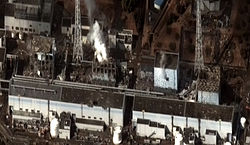 2011 nuclear disaster in Japan
 born 1971 American businessman
 born 1942 46th President of the United States
 1947–1991 tension between the Soviet Union and the United States and their respective allies
 United Nations agency concerned with international public health
 born 2003 Swedish climate protection activist
 race or ethnic-based discrimination
 explosive device that gets its destructive force from nuclear reactions
 American space and aeronautics agency
 ongoing human-caused changes to Earth's climate system, driven primarily by fossil fuel combustion since the Industrial Revolution; encompasses global warming, rising sea levels, and increased frequency of extreme weather events
 born 1948 Vice President of the United States from 1993 to 2001
 aircraft intended for use without onboard human crew members
 World War II American R&D program that produced the first nuclear weapons
 born 1954 26th United States Secretary of Health and Human Services since 2025
 born 1985 American entrepreneur and investor
… and 1 more Mythic card to discover in the game.
The 645 cards of Did you know Cards linked to “Science policy”, those closest to the topic first, then by fame (how often their Wikipedia article is read, and in how many languages): Public election, Chernobyl disaster, Tuberculosis, International Space Station… The more famous the subject, the rarer its card.
Legendaries 170
 Scientist person who systematically observes and analyzes phenomena and tests hypotheses using scientific methods
 process of producing individual organisms with identical genomes
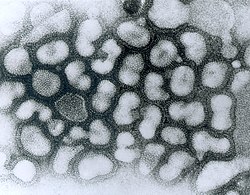 Avian influenza influenza caused by viruses adapted to birds
 Opioid psychoactive chemical
 hydrocarbon derivative that contains only carbon, chlorine and fluorine
 Space debris defunct artificial object or collection of such objects in space
 Fusion power experimental type of electricity generation using nuclear fusion
- severe nuclear reactor accident that results in core damage from overheating
 scale to enable communication of safety information in nuclear accidents
 Biological hazard biological material that poses serious risks to the health of living organisms
 concept of permanent colonies outside of the astronomical body of origin – especially human settlements outside Earth
 Enriched uranium uranium in which the proportion of uranium-235 has been increased through the process of isotope separation
 nuclear accident
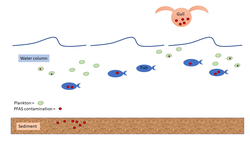 class of compounds
 Genetic testing medical testing related to genetic disorders
 United States government agency
 Military technology application of technology for use in warfare
 American physicist
 learning society in the UK
 MOX fuel nuclear fuel that contains more than one oxide of fissile material
 Waste unwanted or unusable material
 heat-trapping gas in a planet's atmosphere
 species of organisms facing a very high risk of extinction
 GMO organisms whose genetic material has been altered using genetic engineering methods
… and 146 more Legendary cards to discover in the game.
Epics 202
- Eric Lander — director of the Office of Science and Technology Policy and Science Advisor to the President
- Thermal pollution — degradation of water quality by any process that changes ambient water temperature
- Biosecurity — measures aimed at preventing the introduction and/or spread of harmful organisms to animals and plants in order to minimize the risk of transmission of infectious disease
- Energy security — national security considerations of energy availability
- Climate policy — policy measures to contain global warming
- Science and technology in China — national overview for China
- Science and technology in Israel — national research, development and proficience
- Naval Postgraduate School — military university in Monterey, California, USA
- Austrian Academy of Sciences — science academy in Austria
- Science and technology in the United States — national integration of science and technology
- Active SETI — attempt to send messages to intelligent extraterrestrials
- Bulgarian Academy of Sciences — academy of sciences
- National Academies of Sciences, Engineering, and Medicine — scientific national academy for the United States
- Bologna declaration — 1999 declaration
- Objectivity (science) — value that informs how science is practiced and how scientific truths are discovered
- Energy policy of China — national energy production and sources
- Science and technology in India — science and technology all over the world
- Health effects of pesticides — medical condition
- Bruce Alberts — American biochemist
- Science and technology in Iran — science in Iran
- Politicization of science — use of science for political purposes
- Health technology assessment — multi-disciplinary field of policy analysis that studies the medical, social, ethical, and economic implications of development, diffusion, and use of health technology
- Academy of Sciences of Albania — Albania's highest‑level national academy of sciences
- Science and technology in Germany — overview about science and technology in Germany
… and 178 more Epic cards to discover in the game.
In the Science booster
 Science 282,135 cards ›
About
Mythic 25 · Legendary 170 · Epic 202 · Rare 209 · Common 39
Fame score: Wikipedia page views (July 2015 – October 2026, 39 languages). Updated .
All these cards are won by opening boosters in Did you know Cards, the free card game where you learn as you play. All topics ›
All 645 “Science policy” cards in the game