Relativity: the most famous cards
The free Wikipedia card game and general-knowledge games
181 cards
Mythics 8
 two interrelated physics theories by Albert Einstein
 standard and classical physics theory of gravity and space
 physical theory of measurement in an inertial frame of reference proposed in 1905 by Albert Einstein
 Black hole astronomical object so massive, that anything falling into it, including light, cannot escape its gravity
 speed of electromagnetic waves in vacuum
 fundamental interaction affecting all matter
 1879 – 1955 German-born theoretical physicist
 1862 – 1943 German mathematician
The 181 cards of Did you know Cards linked to “Relativity”, those closest to the topic first, then by fame (how often their Wikipedia article is read, and in how many languages): Theory of relativity, General relativity, Special relativity, Black hole… The more famous the subject, the rarer its card.
Legendaries 71
 physical law relating mass to energy
 Time dilation measured time difference as explained by relativity theory
 relativistic quantum mechanical wave equation
 Principle of relativity physics principle stating that the laws of physics must be the same in all reference frames
 factor 1∕√(1−𝑣²∕𝑐²) in special relativity expressing how much the measurements of time, length etc. change for a moving object
 Klein–Gordon equation relativistic wave equation in quantum mechanics
 Spacetime a four-dimensional extent within which entities exist and have physical relationships to each other
 Twin paradox thought experiment in special relativity
- field equations in general relativity
 attempt to detect the relative motion of matter through the stationary luminiferous aether
 mathematical space setting which eases explanation of special relativity
 graph of space and time in special relativity
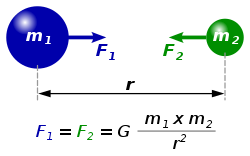 classical mechanics physical law
 boundary of a region of spacetime from which one cannot escape once entered
 Supermassive black hole black hole with mass above 10⁵ solar masses, usually found at the centers of galaxies
 electromagnetic phenomenon
 space-time coordinate transformation that conserves the form of Maxwell’s equations
 hypothetical single, all-encompassing, coherent theoretical framework of physics
 materialization of an abstract coordinate system
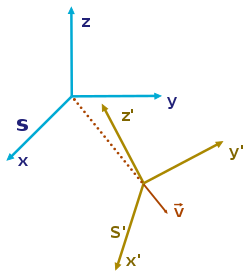 frame of reference not undergoing acceleration
 Gravitational field direction and intensity of gravity in every point of space
 Luminiferous aether postulated medium for the propagation of light
 Schwarzschild radius distance from a massive body where the escape velocity equals the speed of light
 Gravitational lens distribution of matter between a distant light source and a observer
… and 47 more Legendary cards to discover in the game.
Epics 81
- Velocity-addition formula — equation used in relativistic physics
- Sagnac effect — effect due to rotation in special relativity
- History of special relativity — aspect of history
- Lorentz covariance — equivalence in relativistic physics of observation with respect to change of (inertial) reference frame
- Relativistic quantum mechanics — quantum mechanics taking into account particles near or at the speed of light
- History of general relativity — history of the general theory of relativity with contributions from Albert Einstein, Marcel Grossmann, David Hilbert and others
- Ehrenfest paradox — paradox involving the impossibility of a rotating rigid disk in special relativity
- Tolman–Oppenheimer–Volkoff equation — ordinary differential equation describing an isotropic spherical body in static gravitational equilibrium in general relativity
- Representation theory of the Lorentz group — representation of the symmetry group of spacetime in special relativity
- Geodetic effect — the effect of the curvature of spacetime, predicted by general relativity, on a vector carried along with an orbiting body
- Terrell rotation — in special relativity, the visual distortion of the appearance of a passing object moving at relativistic speeds
- ADM formalism — Hamiltonian formulation of general relativity
- Thomas precession — relativistic correction that relates the angular velocity of the spin of a particle following a curvilinear orbit to the angular velocity of the orbital motion
- Post-Newtonian expansion — approximation of General Relativity
- Introduction to general relativity — non-technical introduction to the theory of gravity by Albert Einstein
- Mass in special relativity — concept that incorporates the general understandings from the laws of motion of special relativity along with its concept of mass–energy equivalence
- Relative velocity — velocity of an object or observer B in the rest frame of another object or observer A
- Cosmic censorship hypothesis — conjecture that, in general relativity, there is no naked singularity (i.e. one visible from future null infinity) generically
- Hafele–Keating experiment — test of the theory of relativity in October 1971
- Relativistic mechanics — theory of motion and forces for objects close to the speed of light
- Spacetime curvature — mathematical model used in general relativity
- Pound–Rebka experiment — experiment designed to test Albert Einstein's theory of general relativity
- Two-body problem in general relativity — interaction of two bodies in general relativity
- Bell's spaceship paradox — thought experiment in special relativity: “a string hangs between two spaceships that start accelerating simultaneously equally in an inertial frame; will the string break?”
… and 57 more Epic cards to discover in the game.
In the Science booster
 Science 282,135 cards ›
About
Mythic 8 · Legendary 71 · Epic 81 · Rare 20 · Common 1
Fame score: Wikipedia page views (July 2015 – October 2026, 39 languages). Updated .
All these cards are won by opening boosters in Did you know Cards, the free card game where you learn as you play. All topics ›
All 181 “Relativity” cards in the game