Early computers: the most famous cards
The free Wikipedia card game and general-knowledge games
263 cards
Mythics 2 Legendaries 35
 early natural language processing computer program
 Early British cryptanalysis computer
 early American computer
 early electronic digital computing device
 family of text editors
 operating system
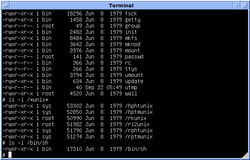 command line interpreter for operating systems
 minicomputer
 Byte unit of digital information equal to 8 bits
 any low-level programming language in which there is a very strong correspondence between the instructions in the language and the architecture's machine code instructions
 programming language with English-like syntax
 computer model built by Apple
 personal computer by Apple Inc.
 Minicomputer class of computers developed in the 1960s, smaller than mainframes; the term mini is misleading today because the dimensions resembled closets
 programming paradigm
 proposed mechanical general-purpose computer, designed by Charles Babbage
 first working programmable, fully automatic digital computer
 Nibble four-bit unit of digital information
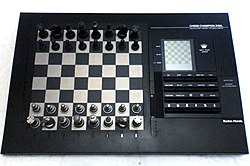 computer hardware and software capable of playing chess
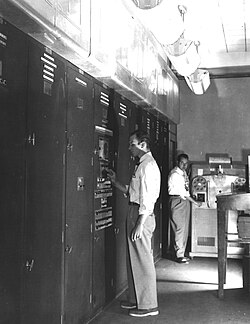 second computer after ENIAC
 general purpose business computer model first produced in the United States in 1951
 motor driven mechanical computer built by Konrad Zuse in the 1930's
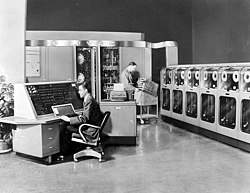 series of mainframe computer models
 general-purpose device for performing arithmetic or logical operations
 1936 – 2026 American mathematician and designer of embedded computer systems
 codebreaking device created at Bletchley Park (United Kingdom)
… and 11 more Legendary cards to discover in the game.
The 263 cards of Did you know Cards linked to “Early computers”, those closest to the topic first, then by fame (how often their Wikipedia article is read, and in how many languages): ELIZA, Colossus, Harvard Mark I, Atanasoff–Berry Computer… The more famous the subject, the rarer its card.
Epics 87
- IBM 700/7000 series — mainframe computer systems made by IBM through the 1950s and early 1960s
- Williams tube — early form of computer memory
- Software crisis — term used in the early days of computing science for the difficulty of writing useful and efficient computer programs in the required time
- Dynabook — early portable computer (laptop) concept
- Automatic Computing Engine — British early electronic serial stored-program computer
- TX-0 — early transistorized computer
- Hybrid computer — combination of analog and digital computer
- IBM 7090 — second generation (c. 1959) scientific mainframe
- IBM 701 — mainframe computer by IBM
- IBM 650 — computer
- Ferranti Mark 1 — one of the world's first commercially available general-purpose digital computers
- Differential analyser — mechanical analogue computer designed to solve differential equations by integration
- BESM — series of Soviet mainframe computers
- Compatible Time-Sharing System — early and influential timesharing operating system developed at MIT in early 1960s for IBM 7090 mainframe
- IBM 1401 — variable wordlength decimal computer
- IAS machine — first electronic computer to be built at the Institute for Advanced Study
- Version 7 Unix — 7th Edition of Research Unix alias UNIX Time-Sharing System
- Research Unix — the original Unix operating system from Bell Labs, developed by Ken Thompson and Dennis Ritchie
- LEO (computer) — 1951 computer
- Atlas (computer) — supercomputer of the 1960s
- Incompatible Timesharing System — time-sharing operating system developed by MIT
- MONIAC Computer — fluidic analogue computer simulating the UK economy
- LINC — minicomputer
- LGP-30 — 1956 American computer
… and 63 more Epic cards to discover in the game.
In the Science booster
 Science 282,135 cards ›
About
Mythic 2 · Legendary 35 · Epic 87 · Rare 114 · Common 25
Fame score: Wikipedia page views (July 2015 – October 2026, 39 languages). Updated .
All these cards are won by opening boosters in Did you know Cards, the free card game where you learn as you play. All topics ›
All 263 “Early computers” cards in the game