Cosmology: the most famous cards
The free Wikipedia card game and general-knowledge games
247 cards
Mythics 16
 1942 – 2018 British theoretical physicist, cosmologist and author
 Black hole astronomical object so massive, that anything falling into it, including light, cannot escape its gravity
 hypothetical begin of the Universe through expansion out of an infinitely small and infinitely dense state
 fundamental interaction affecting all matter
 Galaxy large gravitationally bound system of stars and interstellar matter
 Dark matter mysterious non-luminous matter (and/or radiation) comprising most of the matter in our observable universe
 physical theory of quantized one-dimensional objects with conformal symmetry, which can describe gravitation, gauge theory and other phenomena
 substance made of the distinct antiparticles of common matter particles
 1879 – 1955 German-born theoretical physicist
 1643 – 1727 English mathematician and physicist
 1921 – 1989 Soviet nuclear physicist and human rights activist
 born 1931 English mathematical physicist, recreational mathematician and philosopher
 the whole cosmic system
 standard and classical physics theory of gravity and space
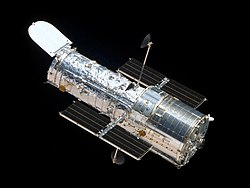 NASA and ESA space telescope (launched 1990)
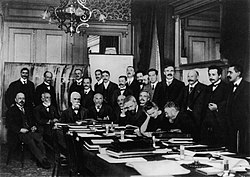 yearly physics award given by the Royal Swedish Academy of Sciences
The 247 cards of Did you know Cards linked to “Cosmology”, those closest to the topic first, then by fame (how often their Wikipedia article is read, and in how many languages): Stephen Hawking, Black hole, Big Bang, Gravity… The more famous the subject, the rarer its card.
Legendaries 86
 Russian-American theoretical physicist and cosmologist
 American astrophysicist and cosmologist
 Swedish-American physicist and cosmologist
 Soviet physicist, physical chemist and cosmologist
 British cosmologist and astrophysicist
 American theoretical physicist and cosmologist
 American astrophysicist and cosmologist
 American theoretical cosmologist
 scientific study of the origin, evolution, and eventual fate of the universe
 electromagnetic radiation as a remnant from an early stage of the universe in Big Bang cosmology
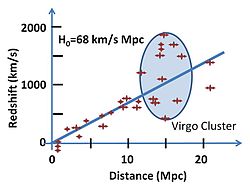 observation in physical cosmology
- history and future of the universe according to Big Bang cosmology
 cosmological model that fits within the Big Bang paradigm, according to which a region of the universe—including the observable universe—underwent a phase of very rapid expansion that is thought to have caused it to grow by a considerable factor
- constant representing stress-energy density of the vacuum in Einstein's equation, which accounts for the rate of expansion of the universe
 cosmological contradiction between the observed darkness of the night sky and a static universe model
 Lambda-CDM model model of big-bang cosmology involving a FLRW spacetime with positive cosmological constant and cold dark matter
 Shape of the universe subject of cosmology
 American astronomer
 rotation of Earth around its axis
 Astronomical object physical body of astronomically-significant size, mass, or role, naturally occurring in a universe
 Dark energy repulsive property of space theorized to drive the universe’s accelerated expansion
 propagating spacetime ripple
 boundary of a region of spacetime from which one cannot escape once entered
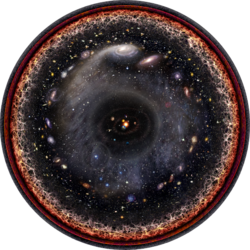 spherical region of the Universe comprising all matter that can be observed from Earth at the present time
… and 62 more Legendary cards to discover in the game.
Epics 106
- Willem de Sitter — Dutch cosmologist (*1872 – †1934)
- Hermann Bondi — Austrian-British mathematician and cosmologist
- George F. R. Ellis — cosmologist from South Africa
- Paul Steinhardt — American cosmologist
- Neil Turok — South African cosmologist
- Ralph Asher Alpher — American cosmologist
- Laura Mersini-Houghton — Albanian cosmologist and theoretical physicist
- Carlos Frenk — Mexican-British-German cosmologist
- Viatcheslav Mukhanov — German cosmologist and theoretical physicist
- David Todd Wilkinson — American cosmologist
- Claudia De Rham — Swiss theoretical cosmologist
- Michael Turner — American theoretical cosmologist
- Licia Verde — Italian cosmologist and theoretical physicist
- Brane cosmology — several theories in particle physics and cosmology related to superstring theory and M-theory
- Anti-de Sitter space — maximally symmetric Lorentzian manifold with negative cosmological constant, which appears in the AdS/CFT correspondence
- Horizon problem — cosmological fine-tuning problem
- De Sitter space — maximally symmetric Lorentzian manifold with positive cosmological constant
- Gödel metric — solution of Einstein field equations with a a homogeneous distribution of swirling dust particles and a negative cosmological constant, featuring closed timelike curves
- Ekpyrotic universe — cosmological model which identifies the Big Bang with a collision between branes and which solves the flatness and homogeneity problems via the flatness of the branes without invoking inflation
- Flatness problem — problem in cosmology, solved by cosmic inflation
- Quantum cosmology — attempts to develop a quantum mechanical theory of cosmology
- Alexei Starobinsky — Russian astrophysicist
- David Spergel — American astronomer
- Raman Sundrum — American physicist
… and 82 more Epic cards to discover in the game.
In the Science booster
 Science 282,135 cards ›
About
Mythic 16 · Legendary 86 · Epic 106 · Rare 33 · Common 6
Fame score: Wikipedia page views (July 2015 – October 2026, 39 languages). Updated .
All these cards are won by opening boosters in Did you know Cards, the free card game where you learn as you play. All topics ›
All 247 “Cosmology” cards in the game