Anthropology: the most famous cards
The free Wikipedia card game and general-knowledge games
4,973 cards
Mythics 171
 scientific study of humans, human behavior, and societies
 country in Eastern Europe
 country in the Caucasus in Eastern Europe and Western Asia
 History past events and their documentation, studied through historiography, archaeology, and related disciplines
 country in East Africa
 country in West Africa
 sovereign state in West Africa
 Poetry literary style characterized by a strong expressiveness of words
 Constitution set of fundamental principles or established precedents according to which a state or other organization is governed
 Architecture process of planning, designing and construction
 any substance consumed to provide nutritional support for the body; form of energy stored in chemical
 span of time before recorded history
 entire structure of a human organism
 structured form of play
 country in West Asia and Southeast Europe
 collection of sacred books in Judaism and Christianity
 country in West Asia
 country in Southeast Asia
 sovereign state in North Africa
 sovereign state in Eastern Europe and Central Asia
 island country in South Asia
 sovereign state in Western Asia
 Abrahamic monotheistic ethnic religion of the Jews
 any single member of Homo sapiens, unique extant species of the genus Homo
… and 147 more Mythic cards to discover in the game.
The 4,973 cards of Did you know Cards linked to “Anthropology”, those closest to the topic first, then by fame (how often their Wikipedia article is read, and in how many languages): Anthropology, Ukraine, Azerbaijan, History… The more famous the subject, the rarer its card.
Legendaries 1,240
 Fable short fictional story that anthropomorphises non-humans to illustrate a moral lesson
 branch of anthropology involving systematic study of individual cultures through participant observation; explores cultural phenomena from the subject's point of view, documenting social interaction and members' own interpretations of behavior
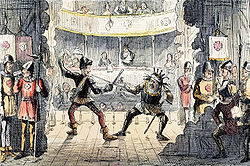 Drama formal type of literature intended for performance, where the text is written in the form of character lines and the author's remarks and is usually divided into acts and scenes
 Proverb saying that gives advice, usually as a metaphor
 Epic poem lengthy narrative poem, ordinarily detailing heroic deeds
 form of poetry with fourteen lines and strict rhyming structure
 Poet person who writes poetry
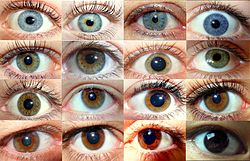 Eye color polygenic phenotypic character
 Human anatomy scientific study of the morphology of the human body
 account of a series of related events or experiences in oral or written form
 Physical tool physical item that can be used to achieve a goal
 East Slavic ethnic group
 Face part of the body at the front of the head
 category of literary composition
 Literacy ability to read for knowledge, write coherently, and think critically about the written word; ability to read, write, and use arithmetic
 White people racial classification and skin color specifier
 living organism that has reached sexual maturity
 plurality of persons considered as a whole, from a government or historical perspective
 Polyamory intimate relationships between more than two persons with the consent and knowledge of all persons involved
 ancient Jewish sect
 Dowry money, goods, or estate that is given by bride's family to the groom at the time of marriage
 piece of furniture used as a place to sleep or relax
 Human height distance from the bottom of the feet to the top of the head in a human body, standing erect
 Monogamy relationship form where each individual has only one partner during their lifetime or at any one time
… and 1,216 more Legendary cards to discover in the game.
Epics 1,817
- Aleš Hrdlička — Czech-American anthropologist
- Alpine race — historical race concept defined by some late 19th-century and early 20th-century anthropologists as one of the sub-races of the Caucasian race
- Economic anthropology — scholarly field that attempts to explain human economic behavior in its widest historic, geographic and cultural scope
- Marc Augé — French anthropologist and geographer
- Socioeconomics — social science that studies how economic activity affects and is shaped by social processes
- Shifting cultivation — Shifting cultivation or Jhum cultivation
- Participant observation — method of observation in social science
- Laws of cricket — rules of the game of cricket
- Culture of Malaysia — pattern of human activity and symbolism associated with Malaysia and its people
- Saman — tradition of the Gayo people of Aceh province in Sumatra
- Narrative poetry — type of poetry which tells a story
- Culturology — branch of social sciences concerned with the scientific understanding, description, analysis, and prediction of cultures as a whole
- Enculturation — process of acquiring values from a neighboring culture
- Informal education — education that can occur outside of a structured curriculum, including homeschooling, autodidacticism, etc.
- Shaving cream — cream applied to areas of hair growth to facilitate shaving
- Community of practice — a group of people with a common interest to interact regularly to further that interest
- Arabic poetry — poetry produced in the Arabic language
- Garden of the Gods — protected area in Colorado, US
- Luzia — Upper Paleolithic period skeleton of a Paleo-Indian woman
- Culture of Canada — pattern of human activity and symbolism associated with Canada and its people
- Area studies — interdisciplinary fields of research in geography, history, culture, politics, economy, ethnology, languages and sociology, within a national, regional, or local context, in order to describe or explain its specificities
- Garhwali — central Pahari language belonging to the northern zone of Indo-Aryan languages
- Invocation — supplication to a supernatural being
- New Wine into Old Wineskins — parable taught by Jesus of Nazareth according to the synoptic gospels
… and 1,793 more Epic cards to discover in the game.
Related topics
- Oral tradition 2,497 cards
- Ethnic groups 4,918 cards
- Sociology 6,891 cards
- Prehistory 4,466 cards
- Folklore 1,559 cards
- Minorities 668 cards
- Indigenous peoples of the Americas 2,455 cards


About
Mythic 171 · Legendary 1,240 · Epic 1,817 · Rare 1,425 · Common 320
Fame score: Wikipedia page views (July 2015 – October 2026, 39 languages). Updated .
All these cards are won by opening boosters in Did you know Cards, the free card game where you learn as you play. All topics ›
All 4,973 “Anthropology” cards in the game