Holy Roman Empire: the most famous cards
The free Wikipedia card game and general-knowledge games
1,175 cards
Mythics 41
 1483 – 1546 German priest and theologian
 1500 – 1558 Holy Roman Emperor from 1519 to 1556
 c. 1098 – 1179 German Benedictine abbess, polymath, mystic and Doctor of Church
 c. 1370 – 1415 Czech theologian, philosopher and preacher
 1195 – 1250 King of Sicily, Holy Roman Emperor (1194–1250, 1220–1250)
 1122 – 1190 Holy Roman Emperor from 1155 to 1190
 1459 – 1519 Holy Roman Emperor
 912 – 973 Holy Roman Emperor from 962 to 973
 city and capital of the Pomeranian Voivodeship on the Baltic coast of northern Poland
 federated state of Germany
 capital city of the West Pomeranian Voivodeship, Poland
 city in Silesian Voivodeship, Poland
 federated state, capital and largest city of Germany
 capital of and state in Austria
 capital city of the Czech Republic
 742 – 814 king of Franks, regarded as the first Holy Roman Emperor (747–814)
 multi-ethnic complex of territories in Western and Central Europe (800/962–1806)
 1755 – 1793 last Queen of France prior to the French Revolution
 capital and largest city of Grand Est, located in the historical region of Alsace
 war principally fought in Central Europe from 1618 to 1648
 Enlightenment-era secret society founded on 1st May 1776
 city in the Lower Silesian Voivodeship, southwestern Poland, and historical capital of Silesia
 family descending from Mayer Amschel Rothschild
 1717 – 1780 ruler of the Habsburg Dominions
… and 17 more Mythic cards to discover in the game.
The 1,175 cards of Did you know Cards linked to “Holy Roman Empire”, those closest to the topic first, then by fame (how often their Wikipedia article is read, and in how many languages): Martin Luther, Charles V, Holy Roman Emperor, Hildegard of Bingen, Jan Hus… The more famous the subject, the rarer its card.
Legendaries 376
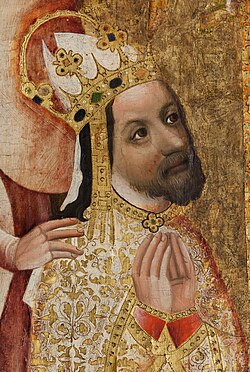 Holy Roman Emperor
 monarch from the House of Luxemburg
 Holy Roman Emperor from 1556 to 1564
 Holy Roman Emperor from 1765 to 1790, (1741-1790)
 German-Dominican friar and saint
 prince of the house of Savoy, then commander in chief of the armies of the Holy Roman Empire
 Holy Roman Emperor, King of Hungary and Croatia, King of Bohemia and Archduke of Austria
 Holy Roman Emperor from 1084 to 1105
 cultural region in France
 city with powiat rights of Poland
 northeasternmost province of the Netherlands
 urban municipality in the Bregenz District, Vorarlberg, Austria
 French department
 province of the Netherlands
 province of the Netherlands
 canton of Switzerland
 department of Grand Est, France
 place in Warmian-Masurian, Poland
 city and urban gmina of Poland
 canton of Switzerland
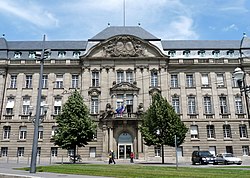 French administrative district of the European Collectivity of Alsace
 kingdom in Central Europe between 1806–1918, from January 1871 part of the German Empire
 overview of German history
- creation of a politically and administratively integrated nation state of German-speaking populations on 18 January 1871, in the form of the German Empire
… and 352 more Legendary cards to discover in the game.
Epics 460
- Imperial ban — punishment in the Holy Roman Empire
- Rheingau — landscape at the Northern side of the Rhine between Wiesbaden and Lorch in Hesse, Germany
- Josephinism — collective domestic policies of Joseph II, Holy Roman Emperor
- Darłowo — city and urban gmina of Poland
- Austrian literature — literature written in Austria
- Name of Austria — etymology of the country name of Austria
- County of Mark — county and state in the Lower Rhenish–Westphalian Circle of the Holy Roman Empire
- Vehmic court — a group of courts in 13th- and 14th-century Germany, linked to a powerful secret organization under sanction of the emperor
- Lot (weight) — unit of mass
- Palatinate-Zweibrücken — former state of the Holy Roman Empire
- Prince-Bishopric of Münster — ecclesiastical principality in the Holy Roman Empire
- Prudnik — city in Opole voivodeship, Poland
- United Duchies of Jülich-Cleves-Berg — former territories in modern Germany and the Netherlands
- Duchy of Oldenburg — historical duchy centred on Oldenburg in what is now north-western Germany
- Duchy of Saxe-Gotha-Altenburg — former Thuringian duchy
- Principality of Bayreuth — immediate territory of the Holy Roman Empire, ruled by the Hohenzollerns as part of Brandenburg-Bayreuth, member of the Franconian Circle
- Imperial Knight — Nobles reporting directly to the Holy Roman Emperor
- Imperial Palace of Goslar — Palace of the Holy Roman Empire
- Stockach — town in Germany, north of Lake Constance
- Lutici — medieval Slavic people
- Duchy of Westphalia — principality of the Holy Roman Empire
- Sundgau — area in Alsace, France
- Palatinate-Neuburg — territory of the Holy Roman Empire
- Interregnum of the Holy Roman Empire (1245–1273) — period of the Holy Roman Empire’s history between 1245, when Frederick II was deposed (or 1250, when Frederick II died, or 1254, when his son Conrad IV died) and the accession of Rudolf I in 1273
… and 436 more Epic cards to discover in the game.
Holy Roman Empire: the 100 most famous
- People — Holy Roman Empire: the 100 best-known people
- Scientists — Holy Roman Empire: the 100 most famous scientists
- Women — Holy Roman Empire: the 25 most famous women
- Painters — Holy Roman Empire: the 94 most famous painters
- Writers — Holy Roman Empire: the 28 most famous writers
- Composers — Holy Roman Empire: the 69 most famous composers
- Castles — Holy Roman Empire: the 26 most famous castles


In the Europe booster
 Europe 1,815,885 cards ›
About
Mythic 41 · Legendary 376 · Epic 460 · Rare 255 · Common 43
Fame score: Wikipedia page views (July 2015 – October 2026, 39 languages). Updated .
All these cards are won by opening boosters in Did you know Cards, the free card game where you learn as you play. All topics ›
All 1,175 “Holy Roman Empire” cards in the game