Esperanto: the most famous cards
The free Wikipedia card game and general-knowledge games
519 cards
Mythics 3 Legendaries 50
 international auxiliary language designed by L. L. Zamenhof
 1859 – 1917 Polish-Jewish physician and inventor of Esperanto
 1868 – 1940 Chinese educator, Esperantist and the president of Peking University
 1907 – 1992 Nobel Prize-winning pharmacologist and Esperantist
 Esperanto edition of Wikipedia
 Esperantist person speaking or using the international language Esperanto
 Esperanto grammar body of rules that describe the structure of expressions in the Esperanto language
 places in the world where Esperanto is spoken
 Native Esperanto speaker person who has acquired Esperanto as one of their native languages
 1904 – 2005 Chinese novelist and anarchist activist
 1875 – 1962 Japanese folklorist
 1850 – 1928 British writer, founder of the garden city movement
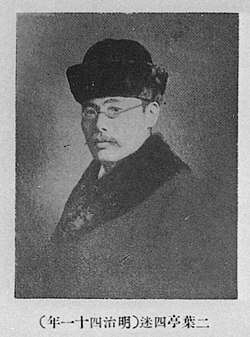 1864 – 1909 Japanese author, translator and literary critic
 1871 – 1948 Japanese co-founder of the Oomoto religion
 constructed international auxiliary language
 worldwide association of writers, founded in London in 1921
 former country located in the Adriatic Sea, off the coast of Italy
 religion founded in 1892 in Japan
 1828 – 1910 Russian author
 born 1930 Hungarian-American investor and philanthropist
 1858 – 1913 German inventor and mechanical engineer
 1896 – 1933 Japanese poet and author of children's literature
 1868 – 1916 Irish republican, trade unionist and socialist revolutionary
 1873 – 1935 French author
 1853 – 1932 Baltic German chemist
 1894 – 1953 Polish poet
 born 1969 Hungarian chess player
… and 26 more Legendary cards to discover in the game.
The 519 cards of Did you know Cards linked to “Esperanto”, those closest to the topic first, then by fame (how often their Wikipedia article is read, and in how many languages): Esperanto, L. L. Zamenhof, Cai Yuanpei, Daniel Bovet… The more famous the subject, the rarer its card.
Epics 111
- Lidia Zamenhof — Polish writer, translator, Esperantist and Holocaust victim
- Vasili Eroshenko — anarchist writer, Esperantist, linguist and teacher
- John C. Wells — British phonetician and Esperanto teacher
- Claude Piron — Swiss translator and Esperantist
- Émile Boirac — French philosopher, parapsychologist, promoter of Esperanto and writer
- Qian Xuantong — Chinese esperantist and linguist
- Zofia Zamenhof — Polish Esperantist
- Klara Zamenhof — Polish esperantist
- Kálmán Kalocsay — physician, writer of Esperanto literature
- Louis-Christophe Zaleski-Zamenhof — Polish-French engineer and Esperantist
- Probal Dasgupta — former president of the Universala Esperanto-Asocio
- Odo Bujwid — Polish biologist and esperantist
- Verda Majo — Japanese pacifist, esperantist, feminist and antifascist
- Valdemar Langlet — Swedish Righteous Among the Nations, publisher and Esperantist
- Renato Corsetti — Italian Esperantist
- Julio Baghy — Hungarian actor, author, novelist, poet, publisher and Esperantist
- Kazimierz Bein — Polish ophthalmologist, lexicographer, translator and esperantist
- Hector Hodler — Swiss Esperantist
- René de Saussure — Swiss mathematician and Esperantist
- Eugène Lanti — Esperantist, socialist and writer
- Ujaku Akita — author and Esperantist
- Edmond Privat — Francophone Swiss Esperantist, historian, university professor, author, journalist and peace activist
- Anna Löwenstein — British author, editor and esperantist
- Liu Shifu — Chinese esperantist and anarchist
… and 87 more Epic cards to discover in the game.
About
Mythic 3 · Legendary 50 · Epic 111 · Rare 192 · Common 163
Fame score: Wikipedia page views (July 2015 – October 2026, 39 languages). Updated .
All these cards are won by opening boosters in Did you know Cards, the free card game where you learn as you play. All topics ›
All 519 “Esperanto” cards in the game