Constructed languages: the most famous cards
The free Wikipedia card game and general-knowledge games
417 cards
Mythics 11
 international auxiliary language designed by L. L. Zamenhof
 1828 – 1910 Russian author
 1892 – 1973 English writer and philologist
 1903 – 1950 British writer and journalist
 1929 – 2018 American fantasy and science fiction author
 1920 – 1986 American writer
 1596 – 1650 French philosopher, mathematician, and scientist
 born 1930 Hungarian-American investor and philanthropist
 1646 – 1716 German mathematician and philosopher
 1936 – 2011 Czech statesman, playwright, and former dissident, the last president of Czechoslovakia and the first president of the Czech Republic
 illustrated codex hand-written in an unknown writing system
The 417 cards of Did you know Cards linked to “Constructed languages”, those closest to the topic first, then by fame (how often their Wikipedia article is read, and in how many languages): Esperanto, Leo Tolstoy, J. R. R. Tolkien, George Orwell… The more famous the subject, the rarer its card.
Legendaries 68
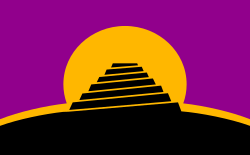 human language whose phonology, grammar, and vocabulary have been consciously devised for human or human-like communication
 constructed language created for Star Trek
 constructed international auxiliary language
 constructed international auxiliary language
 constructed language based on predicate logic
 auxiliary constructed language, originally created by C. George Boeree, and largely based on a Romance substrate partially creolized then modified by some evolutive rules of simplification
 constructed science-fiction language
 constructed language
 experimental constructed artificial language
 constructed language using music notes
 Chinese novelist and anarchist activist
 British writer, founder of the garden city movement
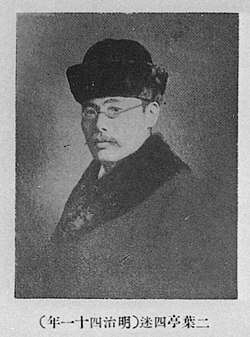 Japanese author, translator and literary critic
 international auxiliary language created by IALA
 minimalist language created by Sonja Lang
 fictional language from J.R.R. Tolkien's legendarium
 Pan-Slavic auxiliary language
 international auxiliary language created 1922
 fictional language from J.R.R. Tolkien's legendarium
 fictional language in the fantasy works of J. R. R. Tolkien
 fictional language in "Game of Thrones"
 fictional language family
 occult language
 former country located in the Adriatic Sea, off the coast of Italy
… and 44 more Legendary cards to discover in the game.
Epics 148
- Slovio — Pan-Slavic constructed language
- Fictional language — constructed languages that have been created as part of a fictional setting
- Láadan — constructed language
- David J. Peterson — American conlanger, writer, and artist
- Xul Solar — Argentine painter
- William Auld — Scottish poet, author, translator
- Claude Piron — Swiss translator and Esperantist
- Julio Baghy — Hungarian actor, author, novelist, poet, publisher and Esperantist
- Hector Hodler — Swiss Esperantist
- Arie de Jong — volapükist from the Netherlands
- Nikolay Nekrasov — Russian writer and esperantist
- Whistled language — emulation of speech by whistling
- Blissymbols — ideographic writing system
- Loglan — logical language developed by James Cooke Brown
- Marc Okrand — American linguist
- Khuzdûl — fictional language of dwarves in the fantasy works of J. R. R. Tolkien
- World Congress of Esperanto — convention of the Esperanto movement
- Latino sine flexione — Latin-based international auxiliary language
- Academy of Esperanto — language scholars who maintain Esperanto
- Ĥ — letter of the Esperanto alphabet
- International System of Typographic Picture Education — method of showing social, technological, biological, and historical connections in pictorial form; standardized and abstracted pictorial symbols to represent social-scientific data with serial repetition
- Universal Esperanto Association — international organization of Esperanto speakers
- Unua Libro — pamphlet by L. L. Zamenhof, first published in 1887 in Russian and subsequently in other languages, introducing the language Esperanto for the first time
- Ĝ — letter of the Latin alphabet used in Esperanto
… and 124 more Epic cards to discover in the game.
About
Mythic 11 · Legendary 68 · Epic 148 · Rare 156 · Common 34
Fame score: Wikipedia page views (July 2015 – October 2026, 39 languages). Updated .
All these cards are won by opening boosters in Did you know Cards, the free card game where you learn as you play. All topics ›
All 417 “Constructed languages” cards in the game